Water Security is National Security

Water resources and how they are managed impact almost all aspects of society and the economy, in particular health, food production and security, domestic water supply and sanitation, energy, industry, and the functioning of ecosystems. Under present climate variability, water stress is already high, particularly in many developing countries, and climate change adds even more urgency for action. Without improved water resources management, the progress towards poverty reduction targets, the Millennium Development Goals, and sustainable development in all its economic, social and environ- mental dimensions, will be jeopardized. UN Water.Org

Thursday, November 13, 2014

Drought Is Taking California Back to the Wild, Wild West

Mary Madden feels paranoid. Last fall Madden noticed something suspicious. The water filling the tanks outside her veterinary clinic in Los Gatos, Calif., was disappearing at an alarming rate. Madden checked for leaks but found none. Then she realized: Someone was stealing her water.
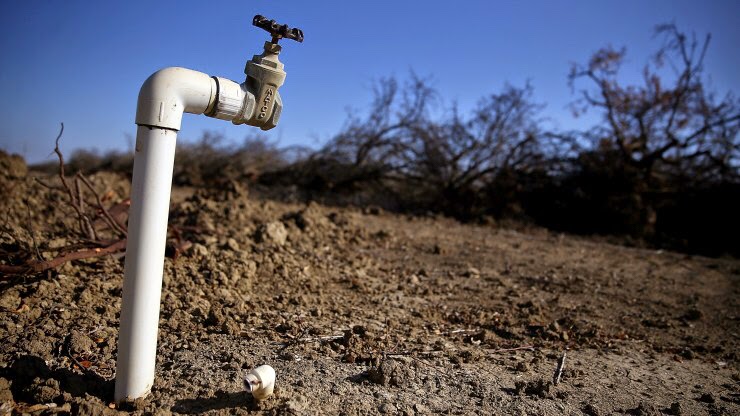
"I just couldn't believe it," she said. "You never imagine anyone would do something like that but there it was, vanishing right before our eyes."

Madden decided to act. She installed security cameras. Then she put locks on the tanks. She even strung a chain across her driveway to keep out unwanted visitors. The theft stopped after the locks went on. But Madden never caught the thief, and she can't stop thinking about who did it.

"This is a really small community, so you sit here and start going through everyone you know and wondering if it was them," she said.

Madden is not alone. Water theft has become increasingly common in California as the state suffers through its worst drought on record. There's no reliable tracking of just how much water has gone missing. But reports of theft rose dramatically in the past year. Officials say a black market set up to peddle water is thriving as wells run dry. And law enforcement is scrambling to respond.

Mendocino County has made catching water thieves a top priority. The sheriff's office set up a water-theft hotline and investigates every tip. It also puts out patrols to sniff out suspicious activity.

In August, a sheriff's deputy there followed a trail of water droplets up a dirt road where he discovered a truck outfitted with a water tank. A confession came quickly. The driver had siphoned water from a nearby canal and planned to sell it to the highest bidder.

The Public Works Department in Lemoore, in Kings County, hired someone to scan city streets for thieves after officials found evidence that someone has been stealing water from fire hydrants.

For now, a statewide effort to curb water theft has yet to materialize. So cities and counties have been left to devise their own methods of retribution.

Officials complain that the penalty for getting caught may not be sufficiently strict: Mendocino County counts water theft as a misdemeanor. County Supervisor Carre Brown considers that a slap on the wrist. "To me this is like looting during a disaster. It should be a felony," Brown said.

Contra Costa County fines anyone caught stealing water $25. Amid worsening theft, the county may soon increase the penalty to $250 and up the amount to $500 for repeat offenders.

But even with all the attention from law enforcement, officials say that much of the theft has gone unpunished.

"This is something that's very hard to pin down. If you don't catch someone in the act, how do you prove they did it?" Mendocino County Sheriff Tom Allman said.

As a result, some California residents have taken matters into their own hands. Online forums and community message boards serve as informal channels where people can post a warning. Word-of-mouth has also proven effective at spreading information.

After Madden told people what had happened, neighbors started to keep an eye on her property. "People will tell me if they see a truck lingering nearby when I'm not there," she said. "We all look out for each other."

Rural communities where residents rely on well water and areas of the state that play host to agricultural operations and illegal marijuana cultivation have been particularly hard hit.

Thousands of gallons of water were stolen from a fire station in North San Juan, a town nestled in the foothills of the Sierra Nevada Mountains, at the height of wildfire season this summer. The theft was discovered after an engineer hit the station's water tank and heard a hollow ringing sound rather than the usual thud.

"We were just absolutely stunned," said Boyd Johnson, a battalion chief with the North San Juan fire department. "Fires are on everyone's mind during the summer so to see this happen, I think it really scared people."

Residents of North San Juan depend on wells for water. The area is also known for growing marijuana and located just a few hours north of California's Central Valley, an area of the state where farmers rely on massive amounts of water to ensure the success of their crops.

This past summer thieves also made off with water from an elementary school and a public health clinic on the San Juan Ridge.

James Berardi, the principal of the school that was hit, says security cameras have been installed in an effort to catch thieves. The fire department is also taking precautions. After the theft, lockboxes with a combination padlock were put on each of the station's water tanks.

"It slows us down a bit getting to the water, but at least we know it's safe," Johnson said.

A growing number of wells have run dry on the ridge as the drought drags on. And that, according to Caleb Dardick, a resident of nearby Nevada City, means the theft is unlikely to end anytime soon.

"People are becoming desperate," Dardick said. "The situation has become really severe in the last few years."

All this has made water a chief concern for residents of the state who say they never used to give water a second thought.

"I think about water constantly, obsessively," Madden said. "I wake up every day dreading what might happen if we run out." More


Saturday, November 8, 2014

Ground water depletion driving global conflicts - NASA scientist

ROME, Nov 7 (Thomson Reuters Foundation) - Global ground water supplies, crucial for sustaining agriculture, are being depleted at an alarming rate with dangerous security implications, a leading scientist said.

Cracked ground of the Atibainha dam Brazil

"It's a major cause for concern because most of the places where it (ground water depletion) is happening are major food producing regions," James Famiglietti, a University of California professor who conducts research for the National Aeronautics and Space Administration (NASA), said in an interview with the Thomson Reuters Foundation.

"India is the worst off, followed by the Middle East, and the U.S. is probably number three ... the Chinese, particularly on the north China plain, are more water limited than people believe."

Famiglietti's conclusions are based on his latest research paper "The global ground water crisis" published in the journal Nature Climate Change last month.

The study uses analysis of satellite images to warn that ground water in many of the world's largest aquifers is being exploited at a far faster rate than it can be naturally replenished.

Farming accounts for more than 80 percent of the United States' water use, according to the U.S. Department of Agriculture, and the figures are similar globally.

Famiglietti has been called to the Pentagon a number of times to discuss the potential impact of groundwater scarcity with leading military planners.

Water-related conflicts are already happening, he said, and security experts are bracing for more.

"In 90 percent of the world where there are violent conflicts, there are water scarcity issues," he said.

Water scarcity has been one component driving Syria's civil war, he said. The agricultural sector lacks sufficient water to farm, and a "young generation of unhappy farmers moved to the city and conflict ensued".

Oil-rich, water scarce countries in the Gulf currently rely on desalinated sea water for much of their water consumption.

Some analysts suggest that more countries will embrace energy-intensive desalination, particularly using nuclear technology, if current trends continue.

Famiglietti said this would not be a good option, as it requires too much energy, and won't be able to efficiently provide the volumes of water needed for large-scale agriculture.

Governments first need to acknowledge there is a problem, he said, and then factor scarcity into pricing, while investing in conservation and new technologies to promote efficiency. More


Friday, November 7, 2014

The Man Who Creates Artificial Glaciers To Meet The Water Needs Of Ladakh

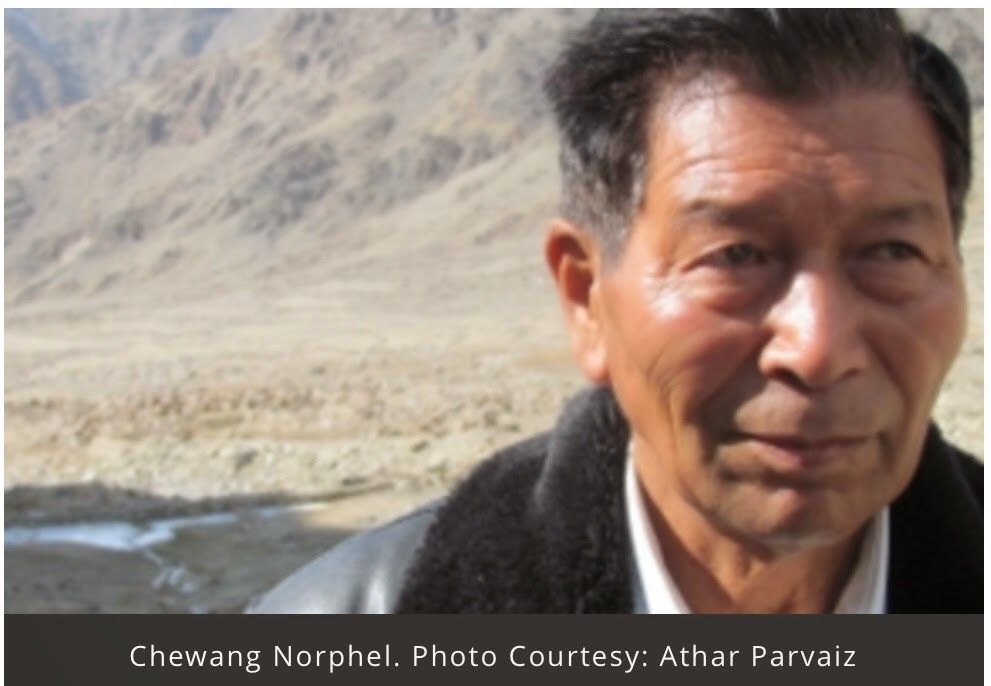
Ladakh’s beautiful mountains might be a paradise for tourists, but ask the locals who have to struggle to meet their basic water needs every year. Chewang Norphel put his engineering skills to a better use and created artificial glaciers to provide water in this cold and dry mountainous region. Know more about his remarkably innovative technology and how it works.

Chewang Norphel, a 79-year old retired civil engineer, has always been a solution provider. The story goes back to 1966 when he was posted in Zanskar, one of the most backward and remote areas in Ladakh, as Sub Divisional Officer. He, along with his team, had to construct school buildings, bridges, canals, roads etc. in that area. The task was very difficult to execute due to lack of skilled labour.

So he started doing the masonry work himself and trained a few villagers to help him. After some years, when he went back to that village, he found out that the villagers he had trained had become perfect mistry and were earning handsome salaries.

Today, he is called the “Ice Man of India” and has created 10 artificial glaciers in Ladakh to help people deal with water scarcity in this cold, mountainous region.

Ladakh, a beautiful location with magnificent scenery around and exquisite beauty, takes everyone’s breath away. But, it is not the same with the people of Ladakh as the cold, dry and infertile land makes their lives harder than we could imagine.

Fortunately, the situation is slowly changing as Ladakh now has artificial glaciers to meet their needs and people have Norphel to thank for his amazing contribution.

Born in 1936, Norphel comes from a farming background and has served in the government service for more than 36 years before he had to take an early retirement due to his bad health. Being at home was not something Norphel enjoyed doing, and at the same time, the poor living conditions in Ladakh constantly troubled him. He thought of putting his engineering skills to a better use.

“Almost all the villages in Ladakh have roads, culverts, bridges, buildings or irrigation systems made by me,”says Norphel. But his biggest contribution came in the form of artificial glaciers.

Being a cold mountain desert, Ladakh sees a low average rainfall of 50 mm annually making people dependent upon glaciers as their primary water source.

80 percent of the population depends on farming, and their main source of irrigation water is the water that comes from the melting of snow and glaciers. Because of global warming, the glaciers are receding quickly and as a result, farmers face a lot of difficulty in getting adequate water. On the other hand, a lot of water gets wasted during the winter months as, due to the severe cold climate, farmers cannot grow any crops in that season.

“So I thought that if we could conserve this water in the form of ice, it can be of help to farmers to some extent during the irrigation period, particularly during the sowing season. The artificial glaciers, being quite close to the villages, melt earlier than the natural glaciers. Also, getting water during the sowing period is the most crucial concern of the farmers because the natural glaciers start melting in the month of June and sowing starts in April and May,” he says.

The idea first came to him when he saw water dripping from a tap which was kept open so as to avoid the water from freezing in winter and bursting the tap. The water gradually froze into the shape of an ice sheet as it came in touch with the ground and made a pool.

It struck him that the water that melts from natural glaciers due to high temperatures in summer goes to waste as it flows into the river. Instead, if this water can be stored in summer and autumn so that it can form a glacier in winter, then this artificial glacier would melt in spring and provide water to the villagers at the right time.

It was now time for action, and he put all his engineering knowledge, field experience and passion to work. He started his first experiment in Phutse village. He made canals to divert the water from the main stream to small catchment areas located four kms away from the village. He also created a shaded area to keep the water frozen in winters.

And, as these glaciers are located at a lower altitude of 13,000 feet as compared to the original glaciers which are located at 18,000 feet, they start melting earlier than the mainstream ones and provide water to the villagers when they need it the most in April.

“The main technique used to create artificial glaciers is to control the velocity of water as much as possible. The region is a hilly area and that is why the gradient of streams is very steep. As a result, in the main streams the water usually does not freeze. So what we have done is we have diverted the water to a shadow area by constructing a diversion channel with a mild grade. When it reaches the site, the water is released downward of the hill, distributing it in a small quantity so that the velocity can be minimized, and side by side we have constructed ice retaining walls in series to store the frozen water. This is the entire methodology of the artificial glacier,” he explains.

Retaining walls for artificial glacier

His first project cost him Rs.90,000. The width of the glacier ranges generally from 50 to 200 feet and the depth from 2 to 7 feet. This low cost model used only locally sourced material and help from the local community. Norphel has successfully built 10 glaciers so far. The smallest one is 500 feet long in Umla and the largest is 2 km long in Phutse.

His efforts have increased the agricultural production, thereby increasing the income of the locals. This has also reduced the migration to cities. His simple technique has brought water closer to the villages, and most importantly, made it available when the villagers need it the most.

In the future, he wants to continue making the glaciers and plans to build in other areas like Lahol, Spiti, Zangskar, etc. The only thing that comes as a challenge is lack of adequate funds.

“As you sow, so you reap. There is no doubt that if one has strong determination and dedication, there is nothing impossible in the world. That is what I believe,” Norphel says.

His simple idea has received acclaim across the globe and he has proved that if man is the one responsible for disturbing nature, he also has the capacity to save it. You just need the right intention to do so. More


Thursday, November 6, 2014

AGWA Launches Toolkit for Climate Change Adaptation in Water Resources Management


4 September 2014: The Alliance for Global Water Adaptation (AGWA) and partners have launched a manual for dealing with uncertainty under climate change by applying climate-informed decision-making to water resource management, project design and risk evaluation.


The manual was launched in a seminar held during World Water Week, on 4 September.


‘Beyond Downscaling: A Bottom-Up Approach to Climate Adaptation for Water Resources Management' is the result of two years' work by AGWA, the World Bank, the Inter-American Development Bank (IDB), US Army Corps of Engineers, University of Massachusetts and RTI International, among others.


It provides practical guidelines for practitioners and project coordinators for risk-based decision making and adaptation of water systems by using a bottom-up approach. The book aims to “provide an alternative approach contributing to improvement in the quality and effectiveness of water resources management planning and project design under climate variability and change uncertainty.”


The manual covers: AGWA's approach to sustainable water management; climate change impacts on water resources; mainstreaming adaptation into water resources management; key tools for supporting climate risk assessment; and approaches to identifying adaptation strategies for water projects. It also makes the case for moving beyond down-scaling global climate models, to a bottom-up approach to climate adaptation in the water sector, and presents a framework for an AGWA-supported adaptation approach.


The approach supported by AGWA, inter alia: recognizes the need to integrate climate adaptation into existing decision-making processes; advocates for bottom-up approaches to vulnerability assessment; supports the use of “systematic decision trees based on existing water resources management approaches”; stresses the importance of creating flexible decision pathways; and emphasizes the integration of flexible governance mechanisms into water resources management.


Speaking at the launch, Marcus Wijnen, Senior Water Resources Management Specialist, World Bank, noted that the book is “work in progress,” and invited stakeholders to provide feedback. More


The 2014 World Water Week took place from 31 August-5 September, in Stockholm, Sweden. [AGWA Publication Webpage] [Publication: Beyond Downscaling: A Bottom-up Approach to Climate Adaptation for Water Resources Management] [Video of Launch]


Sunday, November 2, 2014

The Future Corporation - Paul Polak

TEDxMileh-ligh - Paul Polak - The Future Corporation

Uploaded on May 26, 201 1 • What is the future of the corporation? Paul Polak's vision will likely transform your view of what's possible through capitalism and may change the way current organizations view their business models. His talk details the tremendous shared value that lies within product and system designs for the bottom 90% of the income pyramid.

In the spirit of "ideas worth spreading," TED has created TEDx. TEDx is a program of local, self-organized events that bring people together to share a TED-like experience. Our event is called TEDxMileHigh, where x = independently organized TED event. At a TEDx event, TEDTalks video and live speakers combine to spark deep discussion and connection in a small group. These local, self-organized events are branded TEDx, where x=independently organized

TED event. The TED Conference provides general guidance for the TEDx program, but individual TEDx events, including ours, are self-organized.

Friday, October 17, 2014

Water as a single post-2015 UN Sustainable Development Goal

We need a single post-2015 Sustainable Economic and Social Development Goal for Water with four concrete targets responding to the major challenges: access to truly safe water for basic needs, access to decent sanitation, primary treatment of all wastewater (see my previous post), and, last but not least, rebalancing overdraft of freshwater.

I made my proposals already on several occasions and would like to use this platform to bring them to the attention of an even wider group of people. They are based on a broad consultationearlier this year and then further developed in many discussions with persons from civil society, private sector and government. A single goal for water with four concrete targets as part of the Post-2015 UN Sustainable Development GoalsThe discussion on the post-2015 Goals is ongoing both in New York and in capitals of UN member countries.

The proposals of a single water goals with the four targets as specified below need, if you agree with them, your support whenever and wherever possible

1) Water as a human right – implement the universal accesses to safe drinking water bringing ‘improved’ water to all people by 2025 at the latest, with a parallel focus and longer-term perspective (i.e., beyond 2025) on quality, i.e., moving from an ‘improved’ water perspective to ‘truly safe drinking water’, and on bringing this water actually to the homes of individual citizens. While it is essential for achieving this target that infrastructure costs (including capital costs) are fully covered, water to cover the very basic needs must be free for those who are unable to pay

2) Accelerate the provision of access to improved sanitation to at least 120 million additional people per year, aiming for universal access before 2050. Data on actual improvements achieved show that this is realistically possible; with further strengthened efforts political leaders might aim for even more ambitious targets.

3) Adequate treatment of all municipal and industrial wastewater prior to discharge by 2030. Best practice initiatives and learning to reduce groundwater pollution by agricultural production (traditional, organic, etc.). According to FAO only about half of the 285 cubic-kilometres of wastewater are treated, and only some 10% of treated municipal wastewater is directly re-used. This means there is potential here to close the gap – as outlined in my previous post here on LinkedIn

4) Finally, yet fundamentally, we must address the water overdraft, i.e., bringing freshwater use/waste (initially measured as withdrawals) back into line with sustainable supply (natural renewal minus environmental flows). Without change in the way we are using water today, we risk shortfalls of up to 30% of global cereal production due to water scarcity by 2030. First priority must be on this target 4, if we can’t overcome water overuse, water shortage will impact all other targets above. Cost effective and comprehensive actions are needed, combining the supply side and demand side by increasing the efficiency of water use and managing wastewater as a reusable resource. The 2030 Water Resources Group that I am chairing, a disruptive public-private partnership, is participating in these efforts. But it is an initiative that still needs more support – we are looking for more companies and other stakeholders to join.

Need for reality checks of goals, need for good management, and need for a broader policy context.

All of these targets need to be checked against reality: we did it with data of improvements of the past. But then it is also about good management of their local implementation, rather than solemn declarations, that is what is most needed in the coming years.

And they need to be put in the context of other policies and urgent policy changes:

  • more efforts to reduce loss and waste of food, again a management task, also with the necessary investment in infrastructure, and more responsibility of consumers in advanced economies;
  • we must further liberalise international trade (of virtual water) so, water intensive staple food, for instance, can be grown in regions where water is abundant;
  • land and other property, but also usage rights, for instance private rights to use water particularly of small farmers must be better protected;
  • and governments must no longer wait and stop mandates and subsidies for biofuels.

Water plays a complex role in society and human life, which makes its management quite challenging. This means further discussion on all the points I’ve made over the past few posts remains necessary. More


Tuesday, October 7, 2014

30 Percent of Singapore's Water Supply is Currently Met by Recycled Water

The South-east Asian island country has a population of 5 million residing on less than 750 square kilometers of land. Whilst known for its strong economy, Singapore is lacking one essential asset -- water.

Water security has long been a national priority in Singapore as half of its current water supplies are imported from neighboring Malaysia. "We are preparing for the day that should the water agreement expire, we should be ready to fulfill our own needs," says Chew Men Leong, Chief Executive of the Public Utilities Board.

The agreement with Malaysia is due to expire in 2061, so the country has time to be ready.

Singapore's strategy for a hydrated nation is four-fold: as well as importation, it includes desalinization plants, efficient catchment of rainwater and recycling of sewage.

Rainwater is collected through a network of drains, canals, rivers, storm water, collection ponds and reservoirs with the aim to catch water across two-thirds of the country. But the real hope lies in the membrane technology to treat wastewater known as 'NEWater', created by the country's public utilities board.

Through a four-step series of barriers and membranes, wastewater is made free of solids, microorganisms, and contaminants resulting in potable water supplies for use by humans and industry.

After one decade, the technology meets 30 percent of Singapore's water needs, with plans to triple volumes by 2060.

"The level of quality we receive from the Public Utility Board meets and exceeds the expectation," explains Jagadish CV, CEO of Systems on Silicon Manufacturing, where the water is used in their processing of silicon wafers. "We are using the water three times before we let it into the drain," he says.

The demand by industry is being further met by a new collaboration with Japanese firm Meiden that will supply factories with recycled industrial water. One and a half Olympic-sized swimming pools of water are currently filtered and treated every day.

The goal is to more cost-effectively treat industrial waste streams in the long run.

Professor Asit Biswas from the Lee Kuan School of Public Policy feels other countries should follow the example set by Singapore and even the current standards can be improved to eventually re-use every last drop of water. More

Source: CNN