Water Security is National Security

Water resources and how they are managed impact almost all aspects of society and the economy, in particular health, food production and security, domestic water supply and sanitation, energy, industry, and the functioning of ecosystems. Under present climate variability, water stress is already high, particularly in many developing countries, and climate change adds even more urgency for action. Without improved water resources management, the progress towards poverty reduction targets, the Millennium Development Goals, and sustainable development in all its economic, social and environ- mental dimensions, will be jeopardized. UN Water.Org

Showing posts with label Bramaputra. Show all posts

Wednesday, March 13, 2013

India, Bangladesh very short of water, among Asia's worst - report

NEW DELHI (AlertNet) - Three out of four countries in Asia and the Pacific are facing a serious lack of water, and some are in danger of a crisis unless steps are taken to improve water management, a report by the Asian Development Bank and the Asia-Pacific Water Forum has said.

A private vehicle crosses a bridge as excavators work at the dam site of Kishanganga power project in Gurez, 160 km north of Srinagar, Indian-administered Kashmir. Picture June 21, 2012, REUTERS/Fayaz Kabli

The Asian Water Development Outlook 2013 , the first study of the degree of water security of every country in the region, found that 37 out of 49 nations do not have enough water, the worst being India, Afghanistan, Bangladesh, Pakistan, Cambodia, Kiribati, Nauru and Tuvalu.

"South Asia and parts of Central and West Asia are faring the worst with rivers under immense strain, while many Pacific islands suffer from a lack of access to safe piped water and decent sanitation and are highly vulnerable to increasingly severe water disasters," said an ADB statement.

"By contrast East Asia, which has the highest frequency of hazards in the region, is relatively better off due to higher levels of investment in disaster defences, but urban water security remains poor in many cities and towns."

Water security has become an increasing concern across the world in recent years.

More frequent floods and droughts caused by climate change, pollution of rivers and lakes, urbanisation, over-extraction of ground water and expanding populations mean that many Asia-Pacific nations face serious water shortages.

In addition, the demand for more power by countries like India to fuel their economic growth has resulted in a need to harness more water for hydropower dams.

The study examined water security in countries at five different levels, including access to clean drinking water and sanitation, water availability for industry and agriculture, and water supply systems in urban areas.

"Much progress has been made in terms of providing drinking water, but when we look at the number of households that have piped water, it is much less," said Wouter T. Lincklaen, lead water resources specialist at the ADB.

Only 35 percent of the region's population have a secure water supply. Even worse, only 23 percent of South Asians and 21 percent of those living in the Pacific have piped water, he said.

ADB experts cited China as a good example of improved water management, in which the government not only promised to double annual investment in the water sector to $608 billion by 2020, but also set performance targets for industry, irrigation and water quality. More


Thursday, September 13, 2012

Academy Finds Mixed Climate Impacts on Himalayan Glaciers, Water Supplies

The eroding Rongbuk glacier in the Himalayas, in 1921 and today.
Given all the oversimplified assertions over the years about Himalayan glaciers in a warming global climate, it’s great to see a committee assembled by the National Academy of Sciences weigh in on the question with some data-based findings in a new report, “Himalayan Glaciers: Climate Change, Water Resources, and Water Security.” The bottom line — in sync with other recent analysis — is that the region is seeing a mix of changes, with glaciers growing in some places and shrinking in others and impacts on water supplies mostly inconsequential for decades to come. In most regions, monsoon patterns, population and consumption pressures and dependence on groundwater pumping will remain the dominant source of water-related risks, the report concludes. Read on for an excerpt from the news release and link to the full report, followed by related background:


Himalayan Glaciers Retreating at Accelerated Rate in Some Regions but Not Others; Consequences for Water Supply Remain Unclear, Says New Report

WASHINGTON — Glaciers in the eastern and central regions of the Himalayas appear to be retreating at accelerating rates, similar to those in other areas of the world, while glaciers in the western Himalayas are more stable and could be growing, says a new report from the National Research Council.

The report examines how changes to glaciers in the Hindu Kush-Himalayan region, which covers eight countries across Asia, could affect the area’s river systems, water supplies, and the South Asian population. The mountains in the region form the headwaters of several major river systems — including the Ganges, Mekong, Yangtze, and Yellow rivers — which serve as sources of drinking water and irrigation supplies for roughly 1.5 billion people.

The entire Himalayan climate is changing, but how climate change will impact specific places remains unclear, said the committee that wrote the report. The eastern Himalayas and Tibetan Plateau are warming, and the trend is more pronounced at higher elevations. Models suggest that desert dust and black carbon, a component of soot, could contribute to the rapid atmospheric warming, accelerated snowpack melting, and glacier retreat.

While glacier melt contributes water to the region’s rivers and streams, retreating glaciers over the next several decades are unlikely to cause significant change in water availability at lower elevations, which depend primarily on monsoon precipitation and snowmelt, the committee said. Variations in water supplies in those areas are more likely to come from extensive extraction of groundwater resources, population growth, and shifts in water-use patterns. However, if the current rate of retreat continues, high elevation areas could have altered seasonal and temporal water flow in some river basins. The effects of glacier retreat would become evident during the dry season, particularly in the west where glacial melt is more important to the river systems. Nevertheless, shifts in the location, intensity, and variability of both rain and snow will likely have a greater impact on regional water supplies than glacier retreat will. More


Monday, July 30, 2012

‘Dirty Snow’ Hastens Glacial Melt in Himalayas

KHUMBU, Nepal, Jul 21 2012 (IPS) - Every morning, as Gian Pietro Verza walks up the lateral moraine of the Khumbu Glacier in this Himalayan country’s north-east to take measurements, the wind makes colourful prayer flags flutter noisily. That same wind carries soot particles that are causing the snow on the mountains to melt faster.

The Italian scientist and mountaineer has been working at the Pyramid International Observatory below Mt Everest since 1987, and has seen the rapid retreat of the glaciers around him even in the last 25 years. “The ice used to come right up to there,” he says, pointing towards the jumble of boulders and gravel in the glacier. “Now it has retreated up beyond base camp.”

Agostino Da Polenza and the late professor Ardito Desio set up the Nepal Climate Observatory Pyramid (EvK2Cnr) in a unique collaboration between the Italian Research National Council and the Nepal Academy of Science and Technology, at an altitude of 5,050 metres in Lobuje.

The EvK2Cnr has been doing research into the effect of global warming on the Himalayas, and recently turned its attention to the impact of ‘black carbon’ on accelerating the melting of ice and snow.

Black carbon is fine soot and ash produced by diesel exhausts, thermal power plants, brick kiln smokestacks, and forest fires, but is often confused with gaseous carbon dioxide.

The United Nations Environment Programme (UNEP), along with scientists and international research institutions, says there is evidence increased black carbon deposits on Himalayan glaciers make them absorb more sunlight, accelerating glacial and snow melt.

Historical emissions of greenhouse gases by industrialised nations have traditionally been blamed for melting of the world’s permafrost, leading to sea-level rise. Today India and China have overtaken the rich countries in total greenhouse-gas emissions, and there has been a big increase in their black-carbon generation.

India alone burns 25 million tonnes of coal annually just to fire its brick kilns. Brick kilns in the Nepali capital Kathmandu are responsible for half the air pollution, which in winter sits at ground level due to temperature inversion. The soot particles from these smokestacks mix with diesel exhaust to form a layer of soot over southern Asia that is thousands of kilometres long and up to 4,000 metres thick. Prevailing winds waft them over Himalayan glaciers, melting them faster.

“Although glacier melting is predominantly due to global temperature rise, the deposition of pollutant particles like black carbon can enhance this effect,” says Paolo Bonasoni of the Italy-based Institute of Atmospheric Sciences and Climate (ISAC).

Wind-blown ash from huge pre-monsoon forest fires and their deposit on glaciers may reduce the albedo effect (reflectivity) of the snows by about five percent, and deposits have grown three-fold in the past 40 years, researchers say. More


Saturday, February 18, 2012

Towards Water Security

Water comes in bottles, pours out of skies and faucets and laps at the sand on beaches, covering more than two-thirds of the planet. A recent study also pointed out that the amount of land ice lost annually from glaciers and ice caps is enough to make the global sea level rise by half an inch. Unfortunately the sheer volume of water around is not the kind of water needed to perform tasks such as cleaning, cooking and helping crops grow, much less the water needed for use by industry or as an energy source.

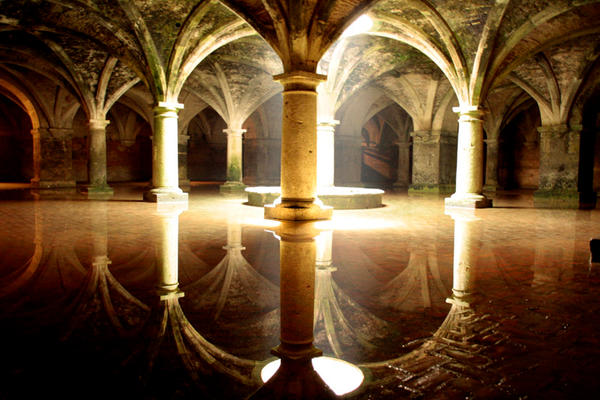
Ancient Roman cistern

To help alleviate water shortage concerns, many researchers are working on developing crops that are tolerant of drought or salt, and seeds that use water more efficiently. Water security itself was one of the topics discussed at the recent 14th Asian Security Conference in New Delhi.

In his speech to the conference attendees on Feb. 13, the Indian defense minister was quoted as saying that, “Water is actually fast emerging as a major source of insecurity and a potential issue for conflict among nations. Thus, nations need to cooperate on sharing water and efficient water usage and harvesting and initiate collective action for preserving our common environment.”

One method of tracking water usage to more efficiently use this resource came from a report released the same week as the Asian security conference. Engineers from the Netherlands calculated the water usage in every country between 1996 and 2005. To measure what they called the “water footprint of humanity,” they considered how much water is being used in the home, in agriculture and in industry, and factored in each country’s use of rainwater, which they referred to as “green” water, groundwater and surface water, which they called “blue” water, and polluted or “gray” water. More


Wednesday, February 15, 2012

Melting Glaciers: What You Need To Know

 If you haven’t already, take a look at this eye-opening blog post about an expedition into the mountains of Nepal. For people in the region, climate change isn’t just an abstract worry; they live with a real and everyday concern about dangerous flash floods that can result from melting glaciers.

Sadly, this is a danger that won’t go away soon. Glaciers all over the world areshrinking. This sustained ice loss is both a natural indicator that the world is warmingand a warning that local communities are at risk. For people inland, melting glaciers can mean flash floods, landslides and reduced drinking water. For people on the coast, melting glaciers mean rising seas.

We’re learning more about glacial retreat all the time. Recently, a new study was released that received a great deal of media attention. It found that mountain glaciers and polar ice 
sheets lost more than 530 gigatons of ice per year from 2003 to 2010, raising average global sea levels more than 1 centimeter. This study is consistent with other estimates of the contribution of land ice to sea level rise. In other words, not that surprising. More
 

Saturday, January 7, 2012

World Water: Get the facts

    Get the Facts
    • According to the World Health Organization, an estimated 1.7 billion people still lack access to clean water. 2.3 billion people suffer from water-borne diseases each year.
    • While the demand for water is on the rise, the supply is shrinking. Water-intensive agriculture, population growth, industrial pollution, breakneck development and other ecological threats are depleting freshwater supplies.
    • The World Bank and other dominant international financial institutions condition their loans on privatization and increased cost recovery – which often requires charging water fees from those who make less than $2 per day.
    • The result of privatization in numerous countries has been disastrous – less access to water for the poor, extremely high tariffs, and poor water quality.
    Food & Water Watch works with coalition partners in communities around the world that are facing the privatization of water. Our goal is to defend water as a public resource, to ensure access to safe and affordable water, to help to build a strong coalition against privatization, and to promote the recognition of the right to water internationally. More

    Thursday, December 22, 2011

    What if India and China Collaborate?

    1. The Melting Water towers:

    Yellow River
    The Himalayas, home and birth place of Ganga, Indus and Brahmaputra
    For China, it is the mother of Mekong, Yellow 
    and Yangtze rivers. Amazingly these high altitude glaciers take care of nearly 3 billion people or half of world's population. The Earth Policy Institute has declared that the melting of these glaciers would be a massive threat to food security. China and India are co-victims of a life-threatening ecological crisis. "In 2050 we will have 9 billion people and average income will be four times what it is today," he said. "India and China have been able to feed their populations because they use water in an unsustainable way. That is no longer possible," according to Jeffrey Sachs, director of the UN's Millennium Project. Since Asia's agricultural revolution, the amount of land under irrigation has tripled. But many parts of the continent have reached the limits of water supplies. "The Ganges [in India] and the Yellow river [in China] no longer flow. There is so much silting up and water extraction upstream they are pretty stagnant," as quoted by The Guardian. So will they co-operate to solve the problem, or go to war over food and water? More