Water Security is National Security

Water resources and how they are managed impact almost all aspects of society and the economy, in particular health, food production and security, domestic water supply and sanitation, energy, industry, and the functioning of ecosystems. Under present climate variability, water stress is already high, particularly in many developing countries, and climate change adds even more urgency for action. Without improved water resources management, the progress towards poverty reduction targets, the Millennium Development Goals, and sustainable development in all its economic, social and environ- mental dimensions, will be jeopardized. UN Water.Org

Showing posts with label change. Show all posts

Saturday, October 14, 2017

TH Köln: International Symposium in Cologne Adopts Declaration on Water Security and Climate Change

TH Köln: International Symposium in Cologne Adopts Declaration on Water Security and Climate Change

As a result of their international symposium on water security and climate change at the TH Köln - University of Applied Sciences 200 researchers from around 45 countries have adopted the 'Cologne Declaration on Water Security and Climate Change'. They confirm that a concerted collaboration between science, politics, business, and civil society is required at all levels in order to ensure the water supply worldwide and manage the risks of climate change.

"Climate change has a massive influence on how the limited resource drinking water is managed. At the same time, well-designed water management is a key factor in enabling societies to adapt to climate change. Due to this complex system with its many natural and man-made influence factors, we require a comprehensive, interdisciplinary approach," explains Prof. Dr. Lars Ribbe, head of the Institute for Technology and Resources Management in the Tropics and Subtropics (ITT) at TH Köln.

The Institute and its associated Center for Natural Resources Development (CNRD) organized the conference together with the Food Security Center at University of Hohenheim and the Center for Sustainable Water Management in Developing Countries at Technische Universität Braunschweig. As academic excellence centers for exchange and development all three institutions are supported by the German Federal Ministry for Economic Cooperation and Development


(https://www.prnewswire.com/news-releases/th-koln-international-symposium-in-cologne-adopts-declaration-on-water-security-and-climate-change-649739783.html

Sunday, August 20, 2017

Transformative water project in the Maldives

Transformative water project in the Maldives takes off with support from UNDP and the Green Climate Fund - Maldives | ReliefWeb

August 18, 2017, Malé - A UNDP-supported project set to transform water security in the outer islands of the Maldives has moved one step closer to implementation this past week, with a meeting of key stakeholders and a special function attended by the Minister of Environment and Energy, Minister of State for Environment and Energy, and UNDP Resident Representative.

Together the events held in the capital Malé mark a critical milestone in the commencement of the project’s implementation, expected to begin early September 2017.

“Climate change is a significant challenge to the development of Maldives, not only in an environmental aspect, but also in economic and social aspects,” said the Minister of Environment and Energy Mr. Thoriq Ibrahim in his opening remarks. “The Maldives project was among the first projects approved by the Green Climate Fund, and this event brings stakeholders together to discuss and exchange information vital for implementation.”

“As a small island developing state, the Maldives has been both a champion and a poster-child for the impacts of climate change,” said UNDP Resident Representative Ms. Shoko Noda. “The Government, and in particular the Ministry of Environment and Energy, has been at the forefront of climate action. Today marks the beginning of a paradigm shift towards climate-resilience, one we envision will be a turning point for the future of water security in the country.” More

Transformative water project in the Maldives

Transformative water project in the Maldives takes off with support from UNDP and the Green Climate Fund - Maldives | ReliefWeb

August 18, 2017, Malé - A UNDP-supported project set to transform water security in the outer islands of the Maldives has moved one step closer to implementation this past week, with a meeting of key stakeholders and a special function attended by the Minister of Environment and Energy, Minister of State for Environment and Energy, and UNDP Resident Representative.

Together the events held in the capital Malé mark a critical milestone in the commencement of the project’s implementation, expected to begin early September 2017.

“Climate change is a significant challenge to the development of Maldives, not only in an environmental aspect, but also in economic and social aspects,” said the Minister of Environment and Energy Mr. Thoriq Ibrahim in his opening remarks. “The Maldives project was among the first projects approved by the Green Climate Fund, and this event brings stakeholders together to discuss and exchange information vital for implementation.”

“As a small island developing state, the Maldives has been both a champion and a poster-child for the impacts of climate change,” said UNDP Resident Representative Ms. Shoko Noda. “The Government, and in particular the Ministry of Environment and Energy, has been at the forefront of climate action. Today marks the beginning of a paradigm shift towards climate-resilience, one we envision will be a turning point for the future of water security in the country.” More

Friday, July 7, 2017

Food, water security by Sikeli Qounadovu


Thursday, July 06, 2017: THE Pacific Community (SPC) believes it has found the solution in the adaptation and mitigation processes for climate change in as far as food and water security is concerned.

The solution was found through an extensive research which started in 1985 and has the ability of maintaining global temperature below 2C.

Crop production and extension co-ordinator for SPC Dr Siosiua Halavatau said the solution was a traditional knowledge which was practised by forefathers.

He said through this process the Pacific should be able to adapt to the effects of climate change such as long droughts.

"Climate change is here but we have adaptation measures to use to adapt to climate change to produce the goods and this has been practised by our ancestors," he said.

"If you try and increase carbon dioxide to the soil by 0.4 per cent in the year, that should be enough to contribute to making sure global warming does not go more than 1.5 or 2 degrees.

"The soil can fix all carbon dioxide released by fossil fuel, so this is a simple thing and we want to promote this."

He said the simple process was increasing the organic carbon in the soil and the introduction of trees back in the system.

Dr Halavatau said increasing soil organic carbon would help "reduce soil erosion, improve water holding capacity of the soil, improve soil fertility and in the process increase food production".

"Most of the soil in the atolls are limited to plant nutrients like potassium, iron, copper and manganese.

"Find plants or leaves that are high in these nutrients and then you make your compost with that, so when you add to your crop you are adding the nutrients to the soil.

"For high islands I was proposing using cover crop. This cover crop is amazing. It will fix nitrogen from the air and give it to the crop.

"For soil like here in Fiji there is a problem called phosphorus fixation, this mucuna (cover crop) can fix this. It also improves the organic matter in the soil and it will also help improve the soil health and improve the yield of the crop.

"Peach cowpea which grows a lot in atolls is high in iron, so if you add this to the compost it will add iron, for potassium if you bring your fire ash or the wood ash and you add it to the compost it will strengthen the potassium of the soil."

Dr Halavatau said these natural processes were researched and practised in eight countries in the Pacific and had proven to be a success with the most successful story being the revival of the dalo industry in Taveuni.

The European Union head of infrastructure and natural resources Jesús Lavina believes it is about time that traditional knowledge are also incorporated as world leaders look for adaptation and mitigation measures because of climate change. More

Sunday, November 4, 2012

PEC Supports Water Access Projects in Palau, Marshall Islands

26 October 2012: The Pacific Islands Forum Secretariat (PIFS) has reported on recent grants to Palau and Marshall Islands from the Pacific Environment Community (PEC) Fund, which PIFS administers.

Palau will receive US$4 million to establish a solar-powered desalination project, to ensure a regular and reliable supply of safe drinking water to residents in Peleliu, Palau. The project includes the installation of a solar-powered Reverse Osmosis (RO) plant that desalinates groundwater using solar energy, producing fresh water. The solar power generation system will produce approximately 98,820 kilowatt hours (kWh) of energy per year, contributing 0.11% electricity towards Palau’s current power generation. Palau’s Ministry of Public Infrastructure, Industries and Commerce through the Energy Office will be the focal point for the project, and the Bureau of Public Works will operate and maintain the systems upon completion.

A similar project was approved for the Marshall Islands, which will receive US$3,150,105 to establish the Potable Water Solutions for Outer Islands by Photovoltaic (PV) Reverse Osmosis (RO) System Project. This project will assist islands in maintaining water supply while minimizing the effects of long, dry periods of little to no rainfall. Under the project, small portable solar PV powered RO systems will be installed at community elementary schools in each outer atoll, providing 150 to 300 gallons of fresh potable water daily.

The PEC Fund is a commitment by the Government of Japan to provide 6.8 billion Japanese yen (approximately US$66 million) to Forum Island Countries for the establishment of solar and desalination initiatives to address environmental challenges. Islands which have accessed the fund include Cook Islands, the Federated States of Micronesia, Fiji, Kiribati, Nauru, Niue, the Republic of Palau, Samoa, Solomon Islands and Tuvalu. [PIFS Press Release: Palau] [PIFS Press Release: Marshall Islands] More


Tuesday, September 11, 2012

Droughts Are Pushing Trees to the Limit

ScienceDaily (Sep. 10, 2012) — Droughts in the Southwest made more severe by warming temperatures are putting plants in stressful growing conditions, a new study has found, identifying an increasingly water-thirsty atmosphere as a key force that sucks moisture from plants, leading to potentially higher stress -- especially in mid and low elevations.

As temperatures rise and droughts become more severe in the Southwest, trees are increasingly up against extremely stressful growing conditions, especially in low to middle elevations, University of Arizona researchers report in a study soon to be published in the Journal of Geophysical Research Biogeosciences.

Lead author Jeremy Weiss, a senior research specialist in the UA department of geosciences, said: "We know the climate in the Southwest is getting warmer, but we wanted to investigate how the higher temperatures might interact with the highly variable precipitation typical of the region."

Weiss' team used a growing season index computed from weather data to examine limits to plant growth during times of drought.

"The approach we took allows us to model and map potential plant responses to droughts under past, present and future conditions across the whole region," explained Julio Betancourt, a senior scientist with the U.S. Geological Survey who co-authored the study along with Jonathan Overpeck, co-director of the UA Institute of the Environment. Betancourt holds adjunct appointments in the UA department of geosciences, the UA School of Geography and Development, the UA School of Natural Resources and the Environment and the UA Laboratory of Tree-Ring Research. More


Monday, July 30, 2012

‘Dirty Snow’ Hastens Glacial Melt in Himalayas

KHUMBU, Nepal, Jul 21 2012 (IPS) - Every morning, as Gian Pietro Verza walks up the lateral moraine of the Khumbu Glacier in this Himalayan country’s north-east to take measurements, the wind makes colourful prayer flags flutter noisily. That same wind carries soot particles that are causing the snow on the mountains to melt faster.

The Italian scientist and mountaineer has been working at the Pyramid International Observatory below Mt Everest since 1987, and has seen the rapid retreat of the glaciers around him even in the last 25 years. “The ice used to come right up to there,” he says, pointing towards the jumble of boulders and gravel in the glacier. “Now it has retreated up beyond base camp.”

Agostino Da Polenza and the late professor Ardito Desio set up the Nepal Climate Observatory Pyramid (EvK2Cnr) in a unique collaboration between the Italian Research National Council and the Nepal Academy of Science and Technology, at an altitude of 5,050 metres in Lobuje.

The EvK2Cnr has been doing research into the effect of global warming on the Himalayas, and recently turned its attention to the impact of ‘black carbon’ on accelerating the melting of ice and snow.

Black carbon is fine soot and ash produced by diesel exhausts, thermal power plants, brick kiln smokestacks, and forest fires, but is often confused with gaseous carbon dioxide.

The United Nations Environment Programme (UNEP), along with scientists and international research institutions, says there is evidence increased black carbon deposits on Himalayan glaciers make them absorb more sunlight, accelerating glacial and snow melt.

Historical emissions of greenhouse gases by industrialised nations have traditionally been blamed for melting of the world’s permafrost, leading to sea-level rise. Today India and China have overtaken the rich countries in total greenhouse-gas emissions, and there has been a big increase in their black-carbon generation.

India alone burns 25 million tonnes of coal annually just to fire its brick kilns. Brick kilns in the Nepali capital Kathmandu are responsible for half the air pollution, which in winter sits at ground level due to temperature inversion. The soot particles from these smokestacks mix with diesel exhaust to form a layer of soot over southern Asia that is thousands of kilometres long and up to 4,000 metres thick. Prevailing winds waft them over Himalayan glaciers, melting them faster.

“Although glacier melting is predominantly due to global temperature rise, the deposition of pollutant particles like black carbon can enhance this effect,” says Paolo Bonasoni of the Italy-based Institute of Atmospheric Sciences and Climate (ISAC).

Wind-blown ash from huge pre-monsoon forest fires and their deposit on glaciers may reduce the albedo effect (reflectivity) of the snows by about five percent, and deposits have grown three-fold in the past 40 years, researchers say. More


Wednesday, July 25, 2012

Faced with drought, Peru's highlanders revive ancient water harvesting

PUNO, Peru (AlertNet) – From the air above the town of Puno, the Peruvian Altiplano appears an endless plain where only clumps of ichu grass withstand the harshness of the sun and lack of water.

But looks deceive: these parched lands in the country’s southeast, located at 4,000 metres altitude (13,000 feet), are home to thousands of poor farmers who for centuries have managed to grow potatoes and grain in this rugged environment.

Today, as droughts become longer, Puno’s inhabitants are relearning ancestral practices of cooperative farming and water harvesting to cope with the challenges associated with climate change.

“We cannot wait for the regional or national government to help us solve our problems,” says Zenon Gomel Apaza, an agronomist and farmer. “The consequences of climate change are occurring now. We have to cope with what we know and have.”

The agronomist won a Rolex Award for Enterprise in 2006 for helping 500 families in Pucara, 60 km (38 miles) north of Lake Titicaca, to widen the genetic variety of their crops to increase food security.

For the past two years, the Asociacion Savia Andina Pucara (ASAP), a nongovernmental organisation focused on agriculture and food security and founded by Gomel Apaza, also has been working to improve water security in Peru’s highlands. In April, the new venture garnered him an Indigenous and Traditional Peoples Conservation Fellowship from the US-based NGO Conservation International.

BUILDING RESERVOIRS

In the village of Quenauni Alto, 20 km (13 miles) from Pucara, Mario Arapa has constructed several cochas (small ponds) on his land under the guidance of ASAP.

Each cocha is no more than two metres by four metres in size (6.5 feet by 13 feet) and only one metre (3.25 feet) deep, but for Arapa and his eight children these traditional reservoirs make the difference between surviving in a harsh environment and capitulation to worsening conditions.

“Frosts are (now) more frequent and last longer. The sun burns harder,” says Arapa. “Before (washed) clothes took two days to dry, now just one day.”

Eddy Wilber Ramos, an agronomist and Gomel Apaza’s assistant, says tougher times mean “there are dozens of families who are migrating from these areas because they are no longer able to tolerate the climate conditions in which they must work.” More


UN rights expert urges international community to not turn its back on Tuvalu

19 July 2012 – A United Nations independent expert today called on the international community to not turn its back on the small island State of Tuvalu, where communities are being seriously affected by climate change.


“Climate change is an everyday reality for people in Tuvalu, and is slowly but steadily impacting their human rights to water and sanitation,” warned the Special Rapporteur on the right to safe drinking water, Catarina de Albuquerque, at the end of her first mission to the country. “Climate change will exacerbate water scarcity, saltwater intrusions, sea level rise and frequency of extreme weather events.”

As of 2010, 98 per cent of the population in Tuvalu had access to an improved source of water and 85 per cent had access to improved sanitation facilities, according to a joint report by the World Health Organization (WHO) and the UN Children’s Fund (UNICEF).

However, Ms. de Albuquerque noted, “these figures do not portray an accurate picture of the country’s situation and mask severe challenges currently faced by its population.” She noted that people cannot actually drink directly from the water storage tanks and have to boil it, despite previous efforts to improve the situation.

“People are still suffering from a lack of water in sufficient quantities on a continuous basis. Several people told me that they have no confidence in the sustainability of the water supply,” she said.

The Special Rapporteur called on authorities to ensure that the country’s water harvesting system is used to its maximum potential in old and new buildings, and urged the Government to immediately adopt and implement a national water strategy and plan of action covering the entire population.

“Access to water and sanitation must be affordable to all, in particular to those who have a lower income. The price paid for water, sanitation and hygiene must not compromise access to other human rights such as food, housing or education,” Ms. de Albuquerque said. “I call on the Government to bear this in mind when discussing and adopting new water tariffs or when advancing the use of composting toilets.” More


Tuesday, May 8, 2012

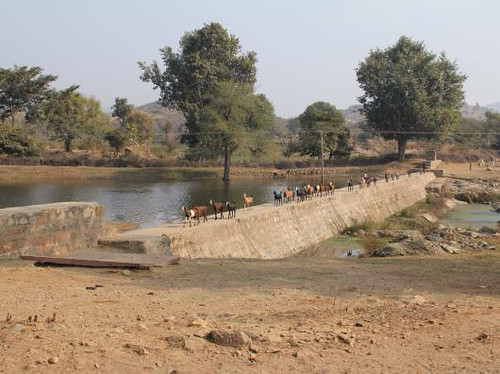
2 Facing water shortages, Indian farmers dig in

Kai Ryssdal: There are, plus or minus, 7 billion people now living on this planet. By the middle of the century, the United Nations tells us it's gonna to be 9 billion. Among the many, many questions that raises is how we're gonna feed them all. The answer is complicated -- a mix of politics, culture, science, and traditions all affecting the global food supply.

Here's part of the science. The average person drinks a couple of quarts of water every day, but it takes more than a thousand times that to produce a day's worth of food. That's a problem everywhere, but especially in India, where scientists say nearly a third of that country's underground aquifers are already in critical condition and worry that the country is headed for a full-blown water crisis.

Today on our series "Food for 9 Billion," Jon Miller went to India to meet a man who's trying to do something about it.


Jon Miller: Rajendra Singh lives in a patch of forest hours from anywhere in the dry hills of eastern Rajasthan. It's dark when I get there. We eat dinner on the ground by an open fire, then he leads me to his office, lights a candle, settles on a mattress and tells me how he came to be famous as the "water man."

Rajendra Singh: When I came here I don't know about the water management, I don't know the water engineering. My background is in the medical science.

This was the 1980s, and Singh had recently finished a degree in traditional Indian medicine. Inspired by Gandhi, he decided to move to the poorest, driest, most godforsaken place in his area and build a health clinic and a school.

Singh: After seven month, one old man told me, Rajendra, we not need medicine and education. We need water. Without water we can't survive. More


Wednesday, January 5, 2011

Water is the main way by which climate change will affect society, ecosystems and world economies; so concrete and immediate responses to proper water management are crucial when we discuss climate adaptation.
When chairing the regional Dialogue of Policy for Latin America and the Caribbean*, Omar Vidal, Executive Director of WWF-Mexico, said:

“In order to achieve concrete results in adaptation to climate change in terms of water is indispensable to generate information and share it, as well as to adopt consensus and inter-sector agreements that involve all actors in comprehensive policy designing. There are important coincidences among the Dialogues for Water and Climate Change (D4WCC) and COP16, in particular with financial mechanism designing, monitoring, fairness, and social participation.” More >>>