Water Security is National Security

Water resources and how they are managed impact almost all aspects of society and the economy, in particular health, food production and security, domestic water supply and sanitation, energy, industry, and the functioning of ecosystems. Under present climate variability, water stress is already high, particularly in many developing countries, and climate change adds even more urgency for action. Without improved water resources management, the progress towards poverty reduction targets, the Millennium Development Goals, and sustainable development in all its economic, social and environ- mental dimensions, will be jeopardized. UN Water.Org

Showing posts with label security. Show all posts

Saturday, February 3, 2018

YOUNG WATER LEADERS CONFERENCE BERLIN: NOV 7, 2018


Welcome to the Young Water Leaders Berlin Event which connects current leaders with future leaders to ensure a water-secure world for today’s and future generations.

Young Water ​Leaders was ​launched in ​September 2017 ​to connect ​current leaders ​with future ​leaders. ​

Young Water ​Leaders Berlin ​is the first ​major event to ​bring current ​and future ​leaders ​together to ​build a water-​secure world.​ ​

~Robert ​Brears, Author ​of Urban Water ​Security (Wiley)​, Founder of ​Mitidaption, ​Mark and Focus, ​and Young Water ​Leaders . Read More

Thursday, December 28, 2017

A Landmark California Plan Puts Floodplains Back in Business


A Landmark California Plan Puts Floodplains Back in Business — Water Deeply

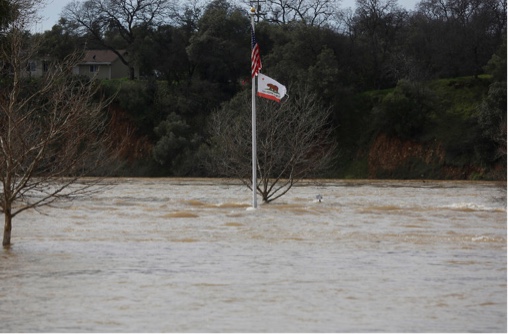
SOMETHING MONUMENTAL HAPPENED on August 25 in California water management that received almost no media attention: It became official policy to reconnect the state’s major rivers with their floodplains.

The action by the Central Valley Flood Protection Board, an obscure panel appointed by the governor, clears the way for the state to embrace projects that allow floods to recharge groundwater. This could include projects like breaching levees, building setback levees and creating flood bypass structures so rivers can inundate historic floodplains for the first time in a century.

In short, it means rivers must no longer be confined within levees as a standard practice.

The result could be not only reduced flood risk, but reviving severely depleted groundwater aquifers, restoring wildlife habitat and improving the capabilities of existing water storage reservoirs.

The state calls these “multibenefit” flood-control projects, said Mike Mierzwa, chief of the office of flood planning at the California Department of Water Resources. They’re a major focus of the Central Valley Flood Protection Plan, a massive policy document the board adopted at its August 25 meeting.
Read More

Thursday, November 16, 2017

Cayman Islands Take Note: $100 Incentive Program to Purchase Real-time Water Sensors


City Launched $100 Incentive Program to Purchase Real-time Water Sensors

The City of ​Welland is ​taking a ​smarter ​approach to ​assisting ​consumers with ​water ​conservation ​and leak ​detection. City ​Council ​approved a ​partnership ​with Alert Labs ​to assist ​Welland ​residents with ​the purchase of ​real-time water ​sensors. ​

Alert Labs is ​a unique ​Ontario based ​company ​committed to ​water ​conservation ​through ​technology. ​

WELLAND ​RESIDENTS GET $​100 OFF ​ FLOWIE

The City of ​Welland is ​offering $100 ​incentives for ​residents to ​purchase a ​Flowie water ​sensor. The ​regular price ​of Flowie is $​259, along with ​a $49 annual ​monitoring fee. ​

The first 100 ​Welland ​residents to ​participate in ​the Flowie ​Incentive ​Program can ​purchase Flowie ​for $159 and ​will receive ​one year of ​monitoring for ​free. ​

FLOWIE : WATER LEAK DETECTOR

The Flowie ​water sensor ​straps onto ​residential and ​commercial ​water meters. ​It detects ​water usage and ​sends alerts to ​the customer’​s phone when it ​identifies high ​or unusual ​water ​consumption. ​

The Flowie can ​also detect ​silent water ​leaks, frozen ​pipes, ​temperature ​drops, and high ​humidity. It ​also generates ​detailed water ​usage reports ​and continues ​to work during ​a power outage. ​

FLOODIE : FLOOD SENSOR

For homeowners ​with flooding ​or water damage ​concerns, ​Flowie has an ​optional ​companion ​sensor, Floodie,​ that alerts ​homeowners to ​the presence of ​unwanted water. ​Floodie fits ​easily under a ​hot water tank, ​dishwasher, ​washing machine,​ or beside a ​sump pump to ​help protect ​against water ​damage ​

REAL-TIME WATER USE DATA

“​Residential ​water meters in ​the City of ​Welland are ​currently read ​and billed ​quarterly. As a ​direct ​consequence, ​staff’s ​ability to ​provide up-to-​date consumption ​data lags up to ​three months,​” said ​Erik Nickel, ​Acting General ​Manager of ​Infrastructure ​Services. ​“A ​customer’​s ability to ​receive early ​notification of ​possible water ​leaks is not a ​service the ​city currently ​offers ​customers; ​however, with ​the installation ​of the Flowie, ​customers can ​be alerted of ​leaks ​immediately.​” ​

Residents are ​urged to take ​advantage of ​the Flowie ​Incentive ​Program and ​contact Alert ​Labs directly ​with inquiries ​or to purchase ​the real-time ​water meter ​sensor online ​at ​www.alertlabs.ca/welland .

Saturday, October 14, 2017

TH Köln: International Symposium in Cologne Adopts Declaration on Water Security and Climate Change

TH Köln: International Symposium in Cologne Adopts Declaration on Water Security and Climate Change

As a result of their international symposium on water security and climate change at the TH Köln - University of Applied Sciences 200 researchers from around 45 countries have adopted the 'Cologne Declaration on Water Security and Climate Change'. They confirm that a concerted collaboration between science, politics, business, and civil society is required at all levels in order to ensure the water supply worldwide and manage the risks of climate change.

"Climate change has a massive influence on how the limited resource drinking water is managed. At the same time, well-designed water management is a key factor in enabling societies to adapt to climate change. Due to this complex system with its many natural and man-made influence factors, we require a comprehensive, interdisciplinary approach," explains Prof. Dr. Lars Ribbe, head of the Institute for Technology and Resources Management in the Tropics and Subtropics (ITT) at TH Köln.

The Institute and its associated Center for Natural Resources Development (CNRD) organized the conference together with the Food Security Center at University of Hohenheim and the Center for Sustainable Water Management in Developing Countries at Technische Universität Braunschweig. As academic excellence centers for exchange and development all three institutions are supported by the German Federal Ministry for Economic Cooperation and Development


(https://www.prnewswire.com/news-releases/th-koln-international-symposium-in-cologne-adopts-declaration-on-water-security-and-climate-change-649739783.html

Thursday, September 7, 2017

A Global Plan of Action of Climate Restoration

A GLOBAL ACTION PLAN OF CLIMATE RESTORATION

A global plan of climate restoration of the “small water cycle” (1) of regional landscapes, with a goal of decreasing floods, drought, natural disasters, and other undesirable climate changes, and increasing the biodiversity and production potential of all continents, through the introduction of various measures of rainwater retention suitable for all areas of human habitation and usage.

PORTUGAL-TAMERA – Bernd Mueller is a permaculture and water specialist, and head of Tamera’s ecology project. The focus of the ecological work of Tamera is on building the Water Retention Landscape as a far-reaching approach to healing the land, and regenerating water supplies, topsoil, pasture and forest, and greater diversity of species. See www.tamera.org.

Please download full article here: https://goo.gl/FMB9z3

1. WHY IS A GLOBAL ACTION PLAN (GAP) NEEDED?

Water management policies worldwide are typically based on the principle of what can be termed the “old water paradigm,” which assumes among many other considerations, that surface waters are the main source and reserve of fresh water supplies. Global legislation and investment therefore tend to be oriented toward protecting, developing, and utilizing surface waters with infrastructure such as large reservoirs for water collection and distribution. Although rainwater is the cyclical source of all fresh- water supplies, it is nonetheless often considered to be waste product to be drained away quickly into streams and rivers.

There is a need to perceive by way of a “new water paradigm,”(1) that in natural ecosystems, water is integrated into small, regional water cycles, which supply vapor to the atmosphere to condense and form rain, the sun being the driving force of the circulation of water in small water cycles. We also need to appreciate the thermoregulatory processes provided by the movement of water between the surface of the earth and the atmosphere, which maintains the proper temperatures for life on earth.

NATURAL FOREST: USA- State of New Hampshire-Forested areas provide excellent shading, infiltration, and transpiration to regulate small water cycles in the landscape.

There needs to be increased attention on the gradual, sometimes almost imperceptible impacts of human activities that have led to the reduction of continental freshwater stocks. There is often a misconception that human activities have no direct effect on water cycles, and that temporal and spatial changes are either part of natural, evolutionary processes, or caused by global climate change. Therefore we tend to underestimate the influence of continental freshwater reserves on global energy and thermoregula- tory processes, as well as the degrading effects of climate change related to excessive drainage of ecosystems. These human impacts can detrimentally affect extensive territories; these include not only traditionally arid landscapes, but also areas of higher rainfall where human infrastructure drains water away from the land, ultimately to accumulate in the oceans.

It is necessary to retain about 100m3 of rainwater for every inhabitant on the planet. This means that, if every person on earth implemented measures to retain 100m3 of rainwater in their area within one year, enough water retention measures would be achieved to retain more than 760 km3 of water, which would in turn replenish the small water cycles in the atmosphere above land. This aforementioned rainwater, returned to the small water cycles, would lead to a decrease in ocean levels by 3 mm. Even if some doubts exist about the global program’s ability to reduce ocean levels, renew the climate or revive the small water cycles, it is nevertheless legitimate to initiate such a program, based on increased water resources such as that evidenced from an experimental program in the nation of Slovakia. Based on the findings of the Slovakian model, it can be expected that, at the global level, the retention of rainwater on land will result in the increased yield of water resources by more than 30 000 m3 per second and there- fore will kickstart the process of decreasing the production of sensible heat into the atmosphere, with an expected yearly reduction by 500 000 TWh. This will effectively lower the risks of natural disasters as well as occurrences of extreme weather events. More

Sunday, August 20, 2017

Transformative water project in the Maldives

Transformative water project in the Maldives takes off with support from UNDP and the Green Climate Fund - Maldives | ReliefWeb

August 18, 2017, Malé - A UNDP-supported project set to transform water security in the outer islands of the Maldives has moved one step closer to implementation this past week, with a meeting of key stakeholders and a special function attended by the Minister of Environment and Energy, Minister of State for Environment and Energy, and UNDP Resident Representative.

Together the events held in the capital Malé mark a critical milestone in the commencement of the project’s implementation, expected to begin early September 2017.

“Climate change is a significant challenge to the development of Maldives, not only in an environmental aspect, but also in economic and social aspects,” said the Minister of Environment and Energy Mr. Thoriq Ibrahim in his opening remarks. “The Maldives project was among the first projects approved by the Green Climate Fund, and this event brings stakeholders together to discuss and exchange information vital for implementation.”

“As a small island developing state, the Maldives has been both a champion and a poster-child for the impacts of climate change,” said UNDP Resident Representative Ms. Shoko Noda. “The Government, and in particular the Ministry of Environment and Energy, has been at the forefront of climate action. Today marks the beginning of a paradigm shift towards climate-resilience, one we envision will be a turning point for the future of water security in the country.” More

Transformative water project in the Maldives

Transformative water project in the Maldives takes off with support from UNDP and the Green Climate Fund - Maldives | ReliefWeb

August 18, 2017, Malé - A UNDP-supported project set to transform water security in the outer islands of the Maldives has moved one step closer to implementation this past week, with a meeting of key stakeholders and a special function attended by the Minister of Environment and Energy, Minister of State for Environment and Energy, and UNDP Resident Representative.

Together the events held in the capital Malé mark a critical milestone in the commencement of the project’s implementation, expected to begin early September 2017.

“Climate change is a significant challenge to the development of Maldives, not only in an environmental aspect, but also in economic and social aspects,” said the Minister of Environment and Energy Mr. Thoriq Ibrahim in his opening remarks. “The Maldives project was among the first projects approved by the Green Climate Fund, and this event brings stakeholders together to discuss and exchange information vital for implementation.”

“As a small island developing state, the Maldives has been both a champion and a poster-child for the impacts of climate change,” said UNDP Resident Representative Ms. Shoko Noda. “The Government, and in particular the Ministry of Environment and Energy, has been at the forefront of climate action. Today marks the beginning of a paradigm shift towards climate-resilience, one we envision will be a turning point for the future of water security in the country.” More

Friday, July 7, 2017

Food, water security by Sikeli Qounadovu


Thursday, July 06, 2017: THE Pacific Community (SPC) believes it has found the solution in the adaptation and mitigation processes for climate change in as far as food and water security is concerned.

The solution was found through an extensive research which started in 1985 and has the ability of maintaining global temperature below 2C.

Crop production and extension co-ordinator for SPC Dr Siosiua Halavatau said the solution was a traditional knowledge which was practised by forefathers.

He said through this process the Pacific should be able to adapt to the effects of climate change such as long droughts.

"Climate change is here but we have adaptation measures to use to adapt to climate change to produce the goods and this has been practised by our ancestors," he said.

"If you try and increase carbon dioxide to the soil by 0.4 per cent in the year, that should be enough to contribute to making sure global warming does not go more than 1.5 or 2 degrees.

"The soil can fix all carbon dioxide released by fossil fuel, so this is a simple thing and we want to promote this."

He said the simple process was increasing the organic carbon in the soil and the introduction of trees back in the system.

Dr Halavatau said increasing soil organic carbon would help "reduce soil erosion, improve water holding capacity of the soil, improve soil fertility and in the process increase food production".

"Most of the soil in the atolls are limited to plant nutrients like potassium, iron, copper and manganese.

"Find plants or leaves that are high in these nutrients and then you make your compost with that, so when you add to your crop you are adding the nutrients to the soil.

"For high islands I was proposing using cover crop. This cover crop is amazing. It will fix nitrogen from the air and give it to the crop.

"For soil like here in Fiji there is a problem called phosphorus fixation, this mucuna (cover crop) can fix this. It also improves the organic matter in the soil and it will also help improve the soil health and improve the yield of the crop.

"Peach cowpea which grows a lot in atolls is high in iron, so if you add this to the compost it will add iron, for potassium if you bring your fire ash or the wood ash and you add it to the compost it will strengthen the potassium of the soil."

Dr Halavatau said these natural processes were researched and practised in eight countries in the Pacific and had proven to be a success with the most successful story being the revival of the dalo industry in Taveuni.

The European Union head of infrastructure and natural resources Jesús Lavina believes it is about time that traditional knowledge are also incorporated as world leaders look for adaptation and mitigation measures because of climate change. More

Sustainable development of water security a must

The Nile at Cairo


CAIRO - July 07, 2017: Suhail Bin Mohammed Faraj Faris Al Mazrouei, Minister of Energy, highlighted the UAE’s support for Arab cooperation on the sustainable development of water security.

He made this statement while chairing the 9th session of the Arab Ministerial Council for Water, at the headquarters of the General Secretariat of the League of Arab States in Cairo.

He stated that the Ministry of Energy has produced a draft water strategy for 2036, in cooperation with relevant UAE authorities, to guarantee the provision of sufficient quantities of water, according to international standards, during both regular periods and emergency shortages that affect the country.

He stressed that this strategy will cover the country’s entire water supply chain, with an emphasis on the strategic production of water resources, storage, transport networks and the supply network linking the nation’s various emirates.

The council discussed a range of important issues and reviewed the implementation of a strategic executive plan for water security in the Arab region, as well as ways of cooperating to address the challenges and future requirements of sustainable development.

It also discussed the implementation of its sustainable development plan for 2030, regarding water, and addressed ways of cooperating on a regional initiative to link the energy, water and food sectors. More

Saturday, July 1, 2017

The Vanishing Nile: A Great River Faces a Multitude of Threats

The Nile River is under assault on two fronts – a massive dam under construction upstream in Ethiopia and rising sea levels leading to saltwater intrusion downstream. These dual threats now jeopardize the future of a river that is the lifeblood for millions


Though politicians and the press tend to downplay the idea, environmental degradation is often an underlying cause of international crises — from the deforestation, erosion, and reduced agricultural production that set the stage for the Rwandan genocide of the 1990s to the prolonged drought that pushed rural populations into the cities at the start of the current Syrian civil war. Egypt could become the latest example, its 95 million people the likely victims of a slow motion catastrophe brought on by grand-scale environmental mismanagement.

It’s happening now in the Nile River delta, a low-lying region fanning out from Cairo roughly a hundred miles to the sea. About 45 or 50 million people live in the delta, which represents just 2.5 percent of Egypt’s land area. The rest live in the Nile River valley itself, a ribbon of green winding through hundreds of miles of desert sand, representing another 1 percent of the nation’s total land area. Though the delta and the river together were long the source of Egypt’s wealth and greatness, they now face relentless assault from both land and sea.

The latest threat is a massive dam scheduled to be completed this year on the headwaters of the Blue Nile, which supplies 59 percent of Egypt’s water. Ethiopia’s national government has largely self-financed the $5 billion Grand Ethiopian Renaissance Dam (GERD), with the promise that it will generate 6,000 megawatts of power. That’s a big deal for Ethiopians, three-quarters of whom now lack access to electricity. The sale of excess electricity to other countries in the region could also bring in $1 billion a year in badly needed foreign exchange revenue.

http://e360.yale.edu/features/vanishing-nile-a-great-river-faces-a-multitude-of-threats-egypt-dam

Tuesday, June 27, 2017

Egypt's water security is red line: Foreign Affairs Ministry spokesperson

Ahmed Abu Zeid


The Egyptian Foreign Affairs Ministry official spokesperson Ahmed Abu Zeid asserted on Thursday that Egypt’s water security is non-negotiable, saying that it is considered a red line that no one can approach.

Abu Zeid’s statements came synchronously with the visit of President Abdel Fattah Al-Sisi to Uganda, after receiving an invitation from his Ugandan counterpart Yoweri Museveni to attend the summit of the Nile Basin countries.

He further added through his twitter account that Egypt faced harsh negotiations to turn the summit into a success, stressing the importance of the summit in launching a serious dialogue on the topics of the Nile water that would hopefully bring the views of the Nile Basin countries closer together.

The negotiations that are currently taking place in Uganda between Nile basin countries are aiming to decrease the negative impact of the Ethiopian Grand Ethiopian Renaissance Dam ‘GERD’ on the water security of countries such as Egypt and Sudan.


(http://www.egyptindependent.com/egypts-water-security-red-line-foreign-affairs-ministry-spokesperson/

Monday, June 19, 2017

Water Security and U.S. Foreign Policy in India, Pakistan, and the Philippines


In 2012, the U.S. National Intelligence Council judged that within the next 10 years, water problems would be a major contributor to instability in “many” countries that are of interest to the United States. South and Southeast Asia, with its many transboundary river basins, large populations, and geopolitical flashpoints, is one among a number of hotspots where such instability could occur.

To help policymakers understand the implications of water problems for national security, World Wildlife Fund-U.S. is working with global experts to produce a book highlighting water conflicts and U.S. strategic interests. Four experts spoke at the Wilson Center on May 9 about the dynamics at play in India, Pakistan, and the Philippines.

The World Economic Forum’s 2016 risk survey ranked water crisis as the top risk globally in the next decade. Among experts, there is growing concern about water issues and state fragility. “When government fails to provide basic water services, when they fail to protect the people against drought and flood, fail to preserve water resources captured by the elites, there is a potential loss of legitimacy and an opportunity for other parties to exploit those failures and deepen the instabilities,” said Claudia Sadoff, the World Bank’s global lead for water security and integrated resource management.

It is essential and urgent to “design and prioritize water programs that will lead to stability, development, and prosperity,” she said.


(https://www.newsecuritybeat.org/2017/06/water-security-u-s-foreign-policy-india-pakistan-philippines/

Thursday, June 15, 2017

The Monk, the Engineer and the Artificial Glacier

This is an updated version of the short film 'The Monk, The Engineer and The Artificial Glacier'.

It has upadates about the work on the pilot project carried out in Jan- Feb 201 5, appended to the original film.
Through the Ice Stupa Artificial Glacier Project, Ladakh attempts to solve its water crisis caused by melting glaciers/climate change.

To support this project go to www.icestupa.org
Category Nonprofits & Activism
License Standard YouTube License

Friday, June 9, 2017

The Relentless March of Drought – That ‘Horseman of the Apocalypse’

ROME, Jun 7 2017 (IPS) - By 2025 –that’s in less than 8 years from today– 1.8 billion people will experience absolute water scarcity, and two thirds of the world will be living under water-stressed conditions. Now it is feared that advancing drought and deserts, growing water scarcity and decreasing food security may provoke a huge ‘tsunami” of climate refugees and migrants.
No wonder then that a major United Nations Convention calls drought ‘one of the four horsemen of the apocalypse.’ See what the United Nations Convention to Combat Desertification (UNCCD) says in this regard.

By 2050, the demand for water is expected to increase by 50 per cent. As populations increase, especially in dry-land areas, more and more people are becoming dependent on fresh water supplies in land that are becoming degraded, the Bonn-based Convention secretariat warns.

“The world’s drought-prone and water scarce regions are often the main sources of refugees.” Monique Barbut.
Water scarcity is one of the greatest challenges of the twenty-first century, it underlines, adding that drought and water scarcity are considered to be the most far-reaching of all natural disasters, causing short and long-term economic and ecological losses as well as significant secondary and tertiary impacts.

To mitigate these impacts, drought preparedness that responds to human needs, while preserving environmental quality and ecosystems, requires involvement of all stakeholders including water users and water providers to achieve solutions for drought, explains UNCCD. More

Wednesday, February 15, 2017

What California’s Dam Crisis Says About the Changing Climate

What California’s Dam Crisis Says About the Changing Climate - The New York Times

STANFORD, Calif. — After five years of record-setting drought, much of California is being pummeled by an extremely wet winter. The disaster unfolding at Oroville, where precipitation is more than double the average, is the latest reminder that the United States needs a climate-smart upgrade of our water management systems.

In the West, much of our water infrastructure is old. Oroville Dam, north of Sacramento, was completed in 1968, nearly a half a century ago. Other major components of our water system are generations older, and maintenance has not been a priority. The damage to Oroville Dam, where the primary spillway developed a giant gash and the emergency spillway threatened to erode, illustrates the hazard of relying on aging infrastructure to protect us from extreme weather. http://nyti.ms/2lLbg6D

Monday, February 13, 2017

Alpacas trump sheep in bid for Andean water security

Alpacas trump sheep in bid for Andean water security


TEPIC, Mexico, Feb 8 (Thomson Reuters Foundation) - High on Ecuador's Andean plains, the Comuna Espejo co-operative is counting on a recent delivery of 20 woolly alpacas to keep its moist grasslands in better shape than the sheep that normally graze there - and in turn help secure water supplies to the nearby capital city of Quito.

“Little by little, we're going to see the impact the alpacas have, but they're easier to manage than sheep and the degradation is less,” said Henry Carrera, vice president of Comuna Espejo, now home to 18 female and two male alpacas.

Besides selling wool, and eventually meat from the camelids, Comuna Espejo hopes to attract tourists with the alpaca project, which forms part of the Quito Water Fund’s plans to conserve the watersheds around the city some 30 km (19 miles) away.

Quito’s fund, the first to be set up under the auspices of U.S.-based environmental group The Nature Conservancy (TNC) in 2000, has provided a model for nearly 60 cities around the world to boost water security from the source to the sink.

The funds combine scientific expertise with public and private-sector investment from water authorities, banks and large water users such as bottlers and brewers.

Now TNC has 20 funds active in Latin America. It plans to double these by 2020 in the region where 80 percent of the population lives in cities, putting huge pressure on water supplies.

“Being able to protect the water sources for the cities is very important for the population, to reduce risks for water quality and quantity,” said Silvia Benitez, TNC’s Quito-based fresh water manager for Latin America.


(http://www.reuters.com/article/latam-water-environment-investment-idUSL5N1FT2HP

Tuesday, January 24, 2017

Improving Water Security Through Nature-Based Solutions

The Nature Conservancy

Improving Water Security Through Nature-Based Solutions
Global report explores the environmental, economic and community benefits of source water protection

Arlington, VA | January 12, 2017
As demand continues to increase for clean and reliable water around the world, protecting the land surrounding our water sources is vital. The Nature Conservancy released a new study today, developed in partnership with the Natural Capital Project, Forest Trends, the Inter-American Development Bank and the Latin American Water Funds Partnership, which analyzes the source watersheds of more than 4,000 large cities around the world. “Beyond the Source: The environmental, economic and community benefits of source water protection,” illustrates how nature-based solutions, such as reforestation and improved agricultural practices, can be implemented at a scale to make a visible difference in sustainable development and improving the lives of billions of people.

Source watersheds collect, store and filter water, and when managed well, provide a number of additional benefits to people and nature. The study finds that four out of five cities analyzed can meaningfully reduce sediment and nutrient pollution through implementing forest protection, reforestation and using cover crops as an agricultural practice to improve water quality. More

Wednesday, July 30, 2014

Water Resources Fact Sheet - Earth Policy Institute

JULY 30, 2014 Water scarcity may be the most underrated resource issue the world is facing today.

Seventy percent of world fresh water use is for irrigation.

Each day we drink nearly 4 liters of water, but it takes some 2,000 liters of water—500 times as much—to produce the food we consume.

1,000 tons of water is used to produce 1 ton of grain.

Between 1950 and 2000, the world’s irrigated area tripled to roughly 700 million acres. After several decades of rapid increase, however, the growth has slowed dramatically, expanding only 9 percent from 2000 to 2009. Given that governments are much more likely to report increases than decreases, the recent net growth may be even smaller.

The dramatic loss of momentum in irrigation expansion coupled with the depletion of underground water resources suggests that peak water may now be on our doorstep.

Today some 18 countries, containing half the world’s people, are overpumping their aquifers. Among these are the big three grain producers—China, India, and the United States.

Saudi Arabia is the first country to publicly predict how aquifer depletion will reduce its grain harvest. It will soon be totally dependent on imports from the world market or overseas farming projects for its grain.

While falling water tables are largely hidden, rivers that run dry or are reduced to a trickle before reaching the sea are highly visible. Among this group that has limited outflow during at least part of the year are the Colorado, the major river in the southwestern United States; the Yellow, the largest river in northern China; the Nile, the lifeline of Egypt; the Indus, which supplies most of Pakistan’s irrigation water; and the Ganges in India’s densely populated Gangetic basin.

Many smaller rivers and lakes have disappeared entirely as water demands have increased.

Overseas "land grabs" for farming are also water grabs. Among the prime targets for overseas land acquisitions are Ethiopia and the Sudans, which together occupy three-fourths of the Nile River Basin, adding to the competition with Egypt for the river’s water.

It is often said that future wars will more likely be fought over water than oil, but in reality the competition for water is taking place in world grain markets. The countries that are financially the strongest, not necessarily those that are militarily the strongest, will fare best in this competition.

Climate change is hydrological change. Higher global average temperatures will mean more droughts in some areas, more flooding in others, and less predictability overall.

Data and additional resources available at www.earth-policy.org

Research Contact: Janet Larsen (202) 496-9290 ex. 14 or jlarsen (at) earth-policy.org

Water Resources Fact Sheet
JULY 30, 2014

Water scarcity may be the most underrated resource issue the world is facing today.

Seventy percent of world fresh water use is for irrigation.

Each day we drink nearly 4 liters of water, but it takes some 2,000 liters of water—500 times as much—to produce the food we consume.

1,000 tons of water is used to produce 1 ton of grain.

Between 1950 and 2000, the world’s irrigated area tripled to roughly 700 million acres. After several decades of rapid increase, however, the growth has slowed dramatically, expanding only 9 percent from 2000 to 2009. Given that governments are much more likely to report increases than decreases, the recent net growth may be even smaller.

The dramatic loss of momentum in irrigation expansion coupled with the depletion of underground water resources suggests that peak water may now be on our doorstep.

Today some 18 countries, containing half the world’s people, are overpumping their aquifers. Among these are the big three grain producers—China, India, and the United States.

Saudi Arabia is the first country to publicly predict how aquifer depletion will reduce its grain harvest. It will soon be totally dependent on imports from the world market or overseas farming projects for its grain.

While falling water tables are largely hidden, rivers that run dry or are reduced to a trickle before reaching the sea are highly visible. Among this group that has limited outflow during at least part of the year are the Colorado, the major river in the southwestern United States; the Yellow, the largest river in northern China; the Nile, the lifeline of Egypt; the Indus, which supplies most of Pakistan’s irrigation water; and the Ganges in India’s densely populated Gangetic basin.

Many smaller rivers and lakes have disappeared entirely as water demands have increased.

Overseas "land grabs" for farming are also water grabs. Among the prime targets for overseas land acquisitions are Ethiopia and the Sudans, which together occupy three-fourths of the Nile River Basin, adding to the competition with Egypt for the river’s water.

It is often said that future wars will more likely be fought over water than oil, but in reality the competition for water is taking place in world grain markets. The countries that are financially the strongest, not necessarily those that are militarily the strongest, will fare best in this competition.

Climate change is hydrological change. Higher global average temperatures will mean more droughts in some areas, more flooding in others, and less predictability overall.

(PDF version)

Data and additional resources available at www.earth-policy.org
Research Contact: Janet Larsen (202) 496-9290 ex. 14 or jlarsen (at) earth-policy.org


Sunday, February 2, 2014

California on track for having the worst drought in 500 years

LOS ANGELES — The punishing drought that has swept California is now threatening the state’s drinking water supply.

With no sign of rain, 17 rural communities providing water to 40,000 people are in danger of running out within 60 to 120 days. State officials said that the number was likely to rise in the months ahead after the State Water Project, the main municipal water distribution system, announced on Friday that it did not have enough water to supplement the dwindling supplies of local agencies that provide water to an additional 25 million people. It is first time the project has turned off its spigot in its 54-year history.

State officials said they were moving to put emergency plans in place. In the worst case, they said drinking water would have to be brought by truck into parched communities and additional wells would have to be drilled to draw on groundwater. The deteriorating situation would likely mean imposing mandatory water conservation measures on homeowners and businesses, who have already been asked to voluntarily reduce their water use by 20 percent.

“Every day this drought goes on we are going to have to tighten the screws on what people are doing” said Gov. Jerry Brown, who was governor during the last major drought here, in 1976-77.

This latest development has underscored the urgency of a drought that has already produced parched fields, starving livestock, and pockets of smog.

“We are on track for having the worst drought in 500 years,” said B. Lynn Ingram, a professor of earth and planetary sciences at the University of California, Berkeley.

Already the drought, technically in its third year, is forcing big shifts in behavior. Farmers in Nevada said they had given up on even planting, while ranchers in Northern California and New Mexico said they were being forced to sell off cattle as fields that should be four feet high with grass are a blanket of brown and stunted stalks.

Fishing and camping in much of California has been outlawed, to protect endangered salmon and guard against fires. Many people said they had already begun to cut back drastically on taking showers, washing their car and watering their lawns.

Rain and snow showers brought relief in parts of the state at the week’s end — people emerging from a movie theater in West Hollywood on Thursday evening broke into applause upon seeing rain splattering on the sidewalk — but they were nowhere near enough to make up for record-long dry stretches, officials said.

“I have experienced a really long career in this area, and my worry meter has never been this high,” said Tim Quinn, executive director of the Association of California Water Agencies, a statewide coalition. “We are talking historical drought conditions, no supplies of water in many parts of the state. My industry’s job is to try to make sure that these kind of things never happen. And they are happening.”

Officials are girding for the kind of geographical, cultural and economic battles that have long plagued a part of the country that is defined by a lack of water: between farmers and environmentalists, urban and rural users, and the northern and southern regions of this state.

“We do have a politics of finger-pointing and blame whenever there is a problem,” said Mr. Brown. “And we have a problem, so there is going to be a tendency to blame people.” President Obama called him last week to check on the drought situation and express his concern.

Tom Vilsack, secretary of the federal Agriculture Department, said in an interview that his agency’s ability to help farmers absorb the shock, with subsidies to buy food for cattle, had been undercut by the long deadlock in Congress over extending the farm bill, which finally seemed to be resolved last week.

Mr. Vilsack called the drought in California a “deep concern,” and a warning sign of trouble ahead for much of the West.

“That’s why it’s important for us to take climate change seriously,” he said. “If we don’t do the research, if we don’t have the financial assistance, if we don’t have the conservation resources, there’s very little we can do to help these farmers.”

The crisis is unfolding in ways expected and unexpected. Near Sacramento, the low level of streams has brought out prospectors, sifting for flecks of gold in slow-running waters. To the west, the heavy water demand of growers of medical marijuana — six gallons per plant per day during a 150-day period — is drawing down streams where salmon and other endangered fish species spawn.

“Every pickup truck has a water tank in the back,” said Scott Bauer, a coho salmon recovery coordinator with the California Department of Fish and Wildlife. “There is a potential to lose whole runs of fish.”

Without rain to scrub the air, pollution in the Los Angeles basin, which has declined over the past decade, has returned to dangerous levels, as evident from the brown-tinged air. Homeowners have been instructed to stop burning wood in their fireplaces.

In the San Joaquin Valley, federal limits for particulate matter were breached for most of December and January. Schools used flags to signal when children should play indoors. More


Monday, July 22, 2013

Peak Water: What Happens When the Wells Go Dry?

Peak oil has generated headlines in recent years, but the real threat to our future is peak water. There are substitutes for oil, but not for water. We can produce food without oil, but not without water.

We drink on average four liters of water per day, in one form or another, but the food we eat each day requires 2,000 liters of water to produce, or 500 times as much. Getting enough water to drink is relatively easy, but finding enough to produce the ever-growing quantities of grain the world consumes is another matter.

Grain consumed directly supplies nearly half of our calories. That consumed indirectly as meat, milk, and eggs supplies a large part of the remainder. Today roughly 40 percent of the world grain harvest comes from irrigated land. It thus comes as no surprise that irrigation expansion has played a central role in tripling the world grain harvest over the last six decades.

During the last half of the twentieth century, the world’s irrigated area expanded from close to 250 million acres (100 million hectares) in 1950 to roughly 700 million in 2000. This near tripling of world irrigation within 50 years was historically unique. But since then the growth in irrigation has come to a near standstill, expanding only 10 percent between 2000 and 2010.

In looking at water and our future, we face many questions and few answers. Could the world be facing peak water? Or has it already peaked?

Farmers get their irrigation water either from rivers or from underground aquifers. Historically, beginning with the Sumerians some 6,000 years ago, irrigation water came from building dams across rivers, creating reservoirs that then enabled them to divert the water onto the land through a network of gravity-fed canals. This method of irrigation prevailed until the second half of the twentieth century, where with few sites remaining for building dams, the prospects for expanding surface irrigation faded. Farmers then turned to drilling wells to tap underground water resources.

In doing so, they learned that there are two types of aquifers: those that are replenishable through rainfall, which are in the majority, and those that consist of water laid down eons ago, and thus do not recharge. The latter, known as fossil aquifers, include two strategically important ones, the deep aquifer under the North China Plain and the Ogallala aquifer under the U.S. Great Plains.

Tapping underground water resources helped expand world food production, but as the demand for grain continued climbing, so too did the amount of water pumped. Eventually the extraction of water began to exceed the recharge of aquifers from precipitation, and water tables began to fall. And then wells begin to go dry. In effect, overpumping creates a water-based food bubble, one that will burst when the aquifer is depleted and the rate of pumping is necessarily reduced to the rate of recharge.

Today some 18 countries, containing half the world’s people, are overpumping their aquifers. Among these are the big three grain producers—China, India, and the United States—and several other populous countries, including Iran, Pakistan and Mexico. More