Water Security is National Security

Water resources and how they are managed impact almost all aspects of society and the economy, in particular health, food production and security, domestic water supply and sanitation, energy, industry, and the functioning of ecosystems. Under present climate variability, water stress is already high, particularly in many developing countries, and climate change adds even more urgency for action. Without improved water resources management, the progress towards poverty reduction targets, the Millennium Development Goals, and sustainable development in all its economic, social and environ- mental dimensions, will be jeopardized. UN Water.Org

Showing posts with label Middle East. Show all posts

Tuesday, March 3, 2015

Climate change key in Syrian conflict – and it will trigger more war in future

Climate change was a key driver of the Syrian uprising, according to research which warns that global warming is likely to unleash more wars in the coming decades, with Eastern Mediterranean countries such as Jordan and Lebanon particularly at risk.

Experts have long predicted that climate change will be a major source of conflict as drought and rising temperatures hurt agriculture, putting a further strain on resources in already unstable regimes.

But the Syria conflict is the first war that scientists have explicitly linked to climate change. Researchers say that global warming intensified the region’s worst-ever drought, pushing the country into civil war by destroying agriculture and forcing an exodus to cities already straining from poverty, an influx of refugees from war-torn Iraq next door and poor government, the report finds.

“Added to all the other stressors, climate change helped kick things over the threshold into open conflict,” said report co-author Richard Seager, of Columbia University in New York.

“I think this is scary and it’s only just beginning. It’s going to continue through the current century as part of the general drying of the Eastern Mediterranean – I don’t see how things are going to survive there,” Professor Seager added.

Turkey, Lebananon, Israel, Jordan, Iraq and Afghanistan are among those most at risk from drought because of the intensity of the drying and the history of conflict in the region, he says. Israel is much better equipped to withstand climate change than its neighbours because it is wealthy, politically stable and imports much of its food. Drought-ravaged East African countries such as Somalia and Sudan are also vulnerable along with parts of Central America – especially Mexico, which is afflicted by crime, is politically unstable, short of water and reliant on agriculture, Prof Seager said.

The conflict in Syria began in spring 2011 and has evolved into a complex multinational war that has killed at least 200,000 people and displaced millions more, according to the Columbia study, which appears in the journal Proceedings of the National Academy of Sciences. It was preceded by a record drought that ravaged Syria between 2006 and 2010.The paper says the timing is unlikely to be a coincidence, citing a recent interview with a 38-year old farmer in Mohasen, an agricultural village in the north east of Syria.

Asked if the conflict was about the drought, Faten – a female farmer who did not want to give her last name – said: “Of course. The drought and unemployment were important in pushing people towards revolution. When the drought happened, we could handle it for two years, and then we said, ‘It’s enough’,” the report said.

The study combined climate, social and economic data relating to the so-called Fertile Crescent, spanning parts of Turkey and much of Syria and Iraq, where agriculture and herding are thought to have started 12,000 years ago and continue to be crucial.

The region has warmed by between 1 and 1.2C since 1900, reducing rainfall in the wet season by an average of 10 per cent. In addition to the warming – which has found to be caused by human greenhouse gas emissions – Syria has had to contend with rapid population growth, from 4 million in the 1950s to 22 million now.

The ruling al-Assad family encouraged water-intensive export crops such as cotton, while illegal drilling of irrigation wells dramatically depleted groundwater that might have provided valuable reserves, the report said. The drought’s effects were immediate. Agriculture production, which typically makes up a quarter of Syria’s economy, plummeted by a third.

In the hard-hit northeast, livestock herds were practically obliterated, cereal prices doubled and nutrition-related diseases among children increased dramatically. As many as 1.5m people fled from the country to the city.

“Whether it was a primary or substantial factor is impossible to know, but drought can lead to devastating consequences when coupled with pre-existing acute vulnerability,” said lead author Colin Kelley, who did the work at Columbia but is now the University of California, Santa Barbara.

The pressure exerted by climate change is even more dangerous because it comes against a backdrop of rising populations and growing scarcity of resources, experts say.

With demand for basic commodities such as wheat and copper set to soar over the next two decades, relatively small shocks to supply risk causing sudden price rises and triggering “overreactions or even militarised responses”, the Chatham House think-tank has warned.

Furthermore, while the effects of rising population and global warming may be felt hardest among the poorer countries most affected by climate change, the impact will be felt worldwide.

Global trade is so interconnected that no importer of resources is insulated from the problems of key exporters – a fact of concern to the UK, which imports 40 per cent of its food and a high proportion of fossil fuels and metals, the think-tank warns. More


Sunday, January 4, 2015

Abu Dhabi summit to discuss water security challenges

More than 32,000 global leaders from 170 countries representing government, industry, investment and research to Abu Dhabi, will provide an upfront look at affordable technologies to enable sustainable water resource management to help meet the Middle East’s rising demand for water.

Hosted by Masdar, Abu Dhabi’s renewable energy company, ADSW is a yearly platform that addresses the interconnected challenges of energy and water security, climate risk and sustainable development.

Running from January 17 to 24, ADSW includes the World Future Energy Summit (WFES), the world’s foremost event dedicated to the advancement of renewable energy, energy efficiency and clean technology; and the International Water Summit (IWS), which provides a business approach to addressing water scarcity, sustainable growth and economic development in arid regions.

“The Mena region is in a truly unique position to solve the challenge of water security,” remarked Raed Bkayrat, vice president of development for Saudi Arabia at First Solar, which is participating in WFES.

“While the region is quite arid, it also has one of the highest solar irradiances of any region in the world, and much of the population has ready access to seawater. Accordingly, solar photovoltaic projects are proving to be sustainable means of powering water desalination in the region, ensuring that the supply of clean water will keep up with the region’s increasing demand for it,” he noted.

Masdar took a major step by launching a pilot project to test energy-efficient desalination technologies – such as reverse osmosis and forward osmosis – powered by renewable energy.

The company awarded contracts to Abengoa, Degremont, Sidem/Veolia and Trevi Systems to build the desalination plants, which are expected to enable the implementation of cost-competitive desalination plants powered by renewable energy in the UAE and abroad.

“Engaging different sectors of the industry is really crucial to bring forward innovative solutions, as well as pilot projects that demonstrate to governments the value of new integrated systems,” Bkayrat added.

Both WFES and IWS will offer numerous keynote addresses, panel discussions and workshops as well as exhibitors introducing affordable technologies to enable sustainable water resource management.

Along with WFES and IWS, ADSW will include the second EcoWaste and the seventh Zayed Future Energy Prize Award Ceremony; it also coincides with the Fifth General Assembly of the International Renewable Energy Agency.-TradeArabia News Service More


Thursday, January 1, 2015

Behind the veil of the Islamic State is a war for water

A little known fact of the war in Syria is that it started at the end of the worst drought in Syrian history, a biblical drought which forced over 1 million farmers into the cities.

Pulitzer Prize-winner Thomas L. Friedman interviewed Syrian refugees and farmers in Syria about the link between this drought and the start of the civil war. He comes to the conclusion that the drought certainly played some role and was probably a key tipping point for a bad situation to turn into a full scale war. In the documentary “Years of living dangerously” we see how wiki-leaked diplomatic cables and high level US officials such as Condoleezza Rice acknowledge this link.

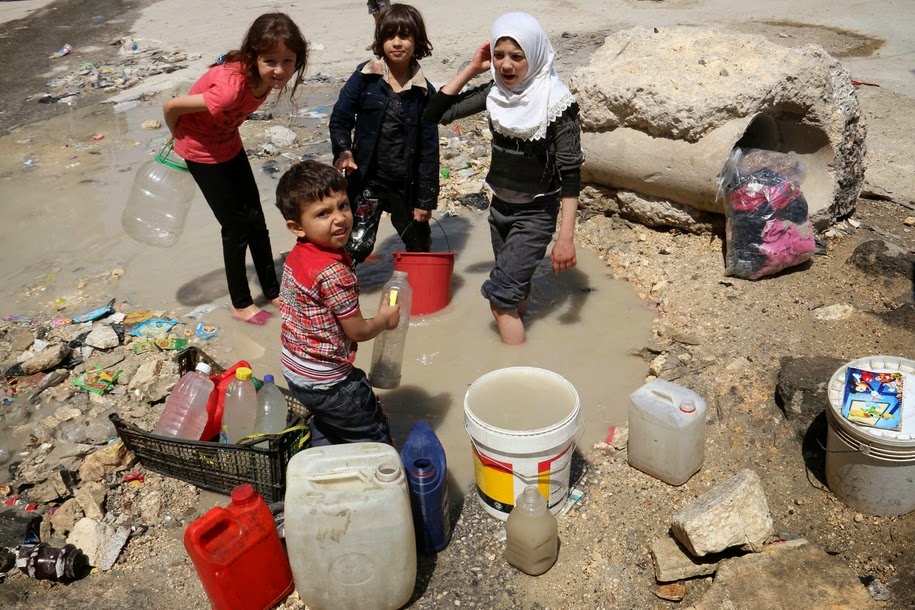
But there’s a lot more happening to explain why behind the veil of a quest for an Islamic State (IS), there’s also a war for water in Syria and Iraq. Making the plight of citizens worse is the continued targeting of water supply networks by both regime and opposition forces, which have attacked strategic lifelines, such as water channels, to gain control of territory and to punish and put pressure on their opponents.

Opening the flood gates …

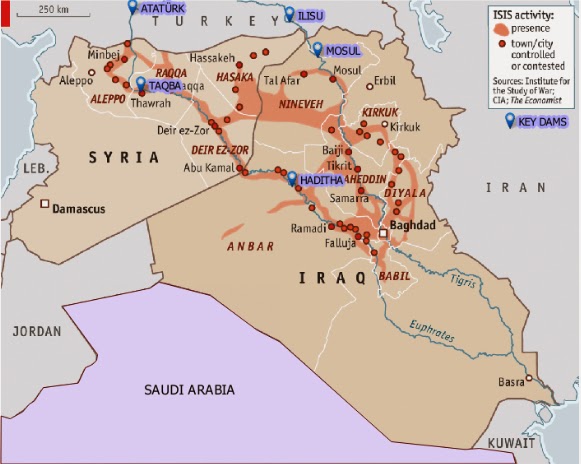
The Islamic State’s quest for hydrological control began in Syria, when it captured the Tabqa Dam in 2013. Rebel-held areas had been systematically denied electricity by President Bashar al-Assad’s forces in their effort to turn the population against the insurgency. The Tabqa Dam was built more than 40 years ago with Russian help and aimed to make Syria self-sufficient in energy production. Behind the dam is Lake Assad, which provides millions of Syrians with drinking water and is a vital irrigation source for farms. After the capture of the dam, IS opened the flood-gates to get maximum electricity supply for the areas they control and win favour with the local population. As a result, the lake dropped six metres, to a record low in May, which worsened the plight of millions of already destitute Syrians as severe water cuts began to hit Aleppo province.

Conflict over the water flowing though the Euphrates and Tigris is of course nothing new and predates religious wars. They were the first rivers to be used for large scale irrigation, in the region once known as the Fertile Crescent. Somewhere between 1720 and 1684 BC, a grandson of Hammurabi dammed the Tigris to prevent the retreat of rebels led by Iluma-Ilum, who declared the independence of Babylon. The Euphrates was already used as a weapon somewhere around 2500 BC, in another fight for Babylon, when the king of Umma cut the banks of irrigation canals alongside the Euphrates dug by his neighbor, the king of Girsu.

The Euphrates and Tigris are the two major and longest rivers in the Middle East. They both originate in Turkey. The Euphrates flows through Syria and Iraq to reach the Persian Gulf while the Tigris flows through Kurdish territory, meeting up with the Euphrates in the Southern Mesopotamian Marshes of Iraq. There are currently at least 46 dams in the Tigris-Euphrates basin, with at least 8 more planned or under construction. These dams have become key pieces of geo-political control in the region.

… and shutting down the flows

While one act of war is opening the flood gates, another is closing them. In 1974, Iraq threatened to bomb the same Tabqa Dam in Syria, alleging that the dam had reduced the flow of Euphrates River water to Iraq. But between then and now, Turkey, through its position upstream, has taken over as the most powerful regional commander of water, by completing the giant Ataturk Dam. In 1990 Syria and Iraq protested that Turkey now has a weapon of war: by closing the gates they could leave them dry. They had good reason to protest. In mid-1990 Turkish president Turgut Özal threatened to restrict water flow to Syria to force it to withdraw support for Kurdish rebels operating in southern Turkey.

In April 2014, the Islamic State blamed the low water levels in Lake Assad to Turkey’s closure of the Ataturk Dam. Sources found by Al Jazeera said that these claims are disputed. But even if the allegations are only partly true: they were used by the Islamic State to issue threats to ‘liberate Istanbul’, if that was necessary. So while Turkey, IS and Assad fight over water, millions of ordinary Syrians and Iraqi’s see their water levels drop dramatically. Not just by a new drought, with rainfall down by 50-85 percent since October 2013, but mostly due to a power struggle.

Tensions over water control in the region are set to heat up further if Turkey completes the Ilisu Dam on the Tigris River near the border of Syria. The Ilisu Dam will generate 1,200 MW and is part of the vast and ambitious Southeastern Anatolia Project, known as GAP after its Turkish title (Guneydogu Anadolu Projesi): a network comprising 22 dams and 19 power plants. The Ilisu reservoir will flood 52 villages and 15 towns, including Hasankeyf, a Kurdish town of 5,500 people, which is the only town in Anatolia that has survived since the Middle Ages and is under archaeological protection. It will displace approximately 16,000 people in the troubled Kurdish region.

The World Bank (WB), the British construction company Balfour Beatty and the Italian company Impreglio have all withdrawn from the problematic project. So have international funds and export credit from Austria, Germany and Switzerland. However, the project is currently funded by Turkish banks. Iraq and also Syria will be the most heavily impacted if the dam and others go through, with the most extreme projections holding that, owing to a combination of climate change and upstream dam activity, the Tigris and Euphrates rivers won’t have sufficient flow to reach the sea by as early as 2040.

If you live in Syria or Iraq and the water irrigating your field stops coming you might join the ranks of any army promising to attack those who kept the water for themselves – no matter if they tell you the truth or not. As is often the case in conflicts or epidemics it is not the facts themselves that count most but what people believe to be the facts. Those who can convince it’s the enemies fault that there’s not enough water will have the key to where the hearts and minds of the people will go to – no matter what the facts are.

The US finally finds a Weapon of Mass Destruction in Iraq

The Tabqa Dam is not the only dam attacked by IS. They are also trying to take the Haditha Dam, the second-largest in Iraq, raising the possibility of catastrophic damage and flooding. On Sunday, the US was bombing IS positions close to the dam. The IS militants are also fighting for control of the Euphrates River Dam, about 120 miles northwest of Baghdad and government forces were fighting to halt their advance. Insurgents from IS seized the Falluja Dam in Iraq in February and closed the floodgates to cause upstream flooding and to cut downstream water supply. Some 40.000 people were displaced just to flood the area around the city of Falluja to force government troops to retreat and lift a siege, while cutting water supplies and hydroelectricity generation for other parts of the country. All that was peanuts compared to what IS did next.

On August 7 IS captured the 1GW Mosul Dam on the Tigris – sending shock waves through Bagdad, Kuwait and the US. Whoever controls the Mosul Dam, the largest in Iraq, controls most of the country’s water and power resources. Located on the Tigris River upstream of Mosul, the dam, 3.6 km long and with 320 MW of capacity daily, formerly known as the Saddam dam, was built beginning in 1980 at a cost of 1.5$ billion USD, to bolster the regime during the Iran-Iraq war by a German-Italian consortium that was led by Hochtief Aktiengesellschaft. Its construction submerged many archaeological sites in the region yet more troubling is that because the dam was constructed on a foundation of soluble gypsum, it requires continuous grouting of the dam’s foundation to promote stability. Due to the engineering problems it presents it has been described recently by US engineers as “the most dangerous dam in the world.” And that was before the “most dangerous terror group ever” captured it.

A senior U.S. administration official said that “The failure of the Mosul Dam could threaten the lives of large numbers of civilians, threaten U.S. personnel and facilities – including the U.S. Embassy in Baghdad – and prevent the Iraqi government from providing critical services to the Iraqi populace,” (Source: Reuters). A 2006 U.S. Army Corps of Engineers report obtained by the Washington Post said the dam, which blocks the Tigris and holds 12 billion cubic meters of water, could flood two cities killing over a half a million people if it were destroyed or collapsed. The tsunami going to Mosul, a city of 1.7 million people, can be 20m high if the dam breaks with a full reservoir.

But even without a catastrophic failure, the dam is already at the epicenter of the war. Soon after the Islamic State captured the Mosul Dam they cut supplies to some villages in the north of the country that have not joined their cause. Recapturing this instrument of war was a sufficient reason for US forced to deploy air power to support Kurdish forces to recapture the dam. Saving the Yazidis from their mountain captured most media attention, but a key reason for the US to bomb Iraqi soil for the first time since 2011 was the fact that IS took the Mosul Dam. After bombing IS positions for several days, freshly re-equipped Kurdish fighters recently regained control of the dam.

Mega Dams & Water Management Practices

The importance of hydro-infrastructure in these battles and how it can be wielded firstly underlines the need for a serious re-appraisal of water management practices. Big dams (with funding from Multilateral agencies such as the WB, national and regional development banks, private equity and pension funds as well as from the Clean Development Mechanism, etc.) cause large scale displacement of populations, are ecologically destructive, wash away any other source of livelihood, and often saddle countries with debt while performing well below planned outputs as regards electricity generation. Moreover, compounded by climate change, contemporary ecological crises are leading to ever more conflict over trans-boundary water rights, such as for example between Ethiopia and Egypt, which are also on the verge of war over the construction of the Grand Renaissance and Gibe 3 dams, which would become Africa’s tallest. The world’s Big Dam Fan Club should take note of what has just happened in Syria and Iraq and realise that once disaster hits, hatred will not go to any God but to those who constructed the weapon of mass destruction. Water, rather than oil, is shaping up to be the key strategic resource in the region. More


Saturday, June 21, 2014

Vanishing Water Landscapes in the Middle East

On 11 June 2014 Francesca de Châtel successfully defended her PhD thesis on water in Syria. The Jordan River has been reduced to 2% of its historic size and is heavily polluted. Across Syria, rivers are shrinking, springs have dried up, and the desert is spreading. The water crisis in the Middle East, the most water-scarce region in the world, is rapidly worsening, yet decision-makers appear unwilling to acknowledge its severity and water remains low on the political agenda. How can this gap between the reality of growing scarcity on the ground and the continued illusion of plenty be explained?

2014.06.11 De Chatel

This is one of the key questions Francesca de Châtel explores in «Vanishing Water Landscapes in the Middle East», a study that combines extensive study on the ground in pre-conflict Syria and across the region with historic data to show how high population growth, overambitious agricultural development projects and uncontrolled water use over the last 60 years have irreversibly disrupted the Middle East’s fragile ecological balance.

acrobat icon Vanishing Water Landscapes in the Middle East

» Article (in German) in Neue Zürcher Zeitung: Die Rache der Verelendeten

» Article (in French) in Le Monde: La thèse qui associait sécheresse et guerre syrienne More


Monday, July 8, 2013

Global threat to food supply as water wells dry up, warns top environment expert

Lester Brown says grain harvests are already shrinking as US, India and China come close to 'peak water'

Iraq facing water shortages

Wells are drying up and underwater tables falling so fast in the Middle East and parts of India, China and the US that food supplies are seriously threatened, one of the world's leading resource analysts has warned.

In a major new essay Lester Brown, head of the Earth Policy Institute in Washington, claims that 18 countries, together containing half the world's people, are now overpumping their underground watertables to the point – known as "peak water" – where they are not replenishing and where harvests are getting smaller each year.

The situation is most serious in the Middle East. According to Brown: "Among the countries whose water supply has peaked and begun to decline are Saudi Arabia, Syria, Iraq and Yemen. By 2016 Saudi Arabia projects it will be importing some 15m tonnes of wheat, rice, corn and barley to feed its population of 30 million people. It is the first country to publicly project how aquifer depletion will shrink its grain harvest.

"The world is seeing the collision between population growth and water supply at the regional level. For the first time in history, grain production is dropping in a geographic region with nothing in sight to arrest the decline. Because of the failure of governments in the region to mesh population and water policies, each day now brings 10,000 more people to feed and less irrigation water with which to feed them."

Brown warns that Syria's grain production peaked in 2002 and since then has dropped 30%; Iraq has dropped its grain production 33% since 2004; and production in Iran dropped 10% between 2007 and 2012 as its irrigation wells started to go dry.

"Iran is already in deep trouble. It is feeling the effects of shrinking water supplies from overpumping. Yemen is fast becoming a hydrological basket case. Grain production has fallen there by half over the last 35 years. By 2015 irrigated fields will be a rarity and the country will be importing virtually all of its grain."

There is also concern about falling water tables in China, India and the US, the world's three largest food-producing countries. "In India, 175 million people are being fed with grain produced by overpumping, in China 130 million. In the United States the irrigated area is shrinking in leading farm states with rapid population growth, such as California and Texas, as aquifers are depleted and irrigation water is diverted to cities."

Falling water tables are already adversely affecting harvest prospects in China, which rivals the US as the world's largest grain producer, says Brown. "The water table under the North China Plain, an area that produces more than half of the country's wheat and a third of its maize is falling fast. Overpumping has largely depleted the shallow aquifer, forcing well drillers to turn to the region's deep aquifer, which is not replenishable."

The situation in India may be even worse, given that well drillers are now using modified oil-drilling technology to reach water half a mile or more deep. "The harvest has been expanding rapidly in recent years, but only because of massive overpumping from the water table. The margin between food consumption and survival is precarious in India, whose population is growing by 18 million per year and where irrigation depends almost entirely on underground water. Farmers have drilled some 21m irrigation wells and are pumping vast amounts of underground water, and water tables are declining at an accelerating rate in Punjab, Haryana, Rajasthan, Gujarat and Tamil Nadu."

In the US, farmers are overpumping in the Western Great Plains, including in several leading grain-producing states such as Texas, Oklahoma, Kansas and Nebraska. Irrigated agriculture has thrived in these states, but the water is drawn from the Ogallala aquifer, a huge underground water body that stretches from Nebraska southwards to the Texas Panhandle. "It is, unfortunately, a fossil aquifer, one that does not recharge. Once it is depleted, the wells go dry and farmers either go back to dryland farming or abandon farming altogether, depending on local conditions," says Brown.

"In Texas, located on the shallow end of the aquifer, the irrigated area peaked in 1975 and has dropped 37% since then. In Oklahoma irrigation peaked in 1982 and has dropped by 25%. In Kansas the peak did not come until 2009, but during the three years since then it has dropped precipitously, falling nearly 30%. Nebraska saw its irrigated area peak in 2007. Since then its grain harvest has shrunk by 15%."

Brown warned that many other countries may be on the verge of declining harvests. "With less water for irrigation, Mexico may be on the verge of a downturn in its grain harvest. Pakistan may also have reached peak water. If so, peak grain may not be far behind."


Saturday, March 23, 2013

Ancient aqueducts [karez] give Iraq a trickle of hope

A millennia-old labyrinth of underground canals may help solve the Middle East's water crisis, say experts.

The ancient karez in Kunaflusa

In the windswept plateaus of northern Iraq, unseen aqueducts which have channelled water to arid settlements for centuries are running dry. Experts say the wide-scale demise of these ancient water systems is an ominous sign of how scarce water in the region will soon become, and the humanitarian disasters that could follow.

For villagers here, tragic consequences have already arrived.

Farez Abdulrahman Ali strides across a muddy field and sweeps a burly arm towards the mountains that loom over Shekh Mamudian village in the wilds of Iraq’s semi-autonomous Kurdistan region. This is the rugged terrain of the peshmerga, the Kurdish military whose name means "those who face death".

Ali explains that a subterranean canal - known in Iraq as a karez - once brought water to the village, where it gushed from a rock-lined tunnel into a pool just below the entrance to the local mosque. From there, it was channelled to nearby fields of okra, eggplant, onion and tobacco.

"Farmers would use the water," said Ali. "On hot days, children would play in the water. In the evenings, people would gather at the karez to talk about village things."

"The karez dates back to the time when karez were dug," he added, matter-of-factly. "Nobody in the village knows when it was dug. Even my grandfather doesn't know. It is probably 800 or 900 or 1,000 years old."

"There is now not enough water for farming. If the karez runs dry,

we will be forced to leave the village." - Fadel Salah, Kunaflusa villager

Dry county

In autumn 2011, for the first time in the village's collective memory, the karez in Shekh Mamudian went dry. As the village chief, or mukhtar, Ali sees the loss of the karez as catastrophic for the livestock and crops the village depends on for its hard won self-sufficiency. Unless it is restored, he fears for the end of a community that withstood assaults by Saddam Hussein’s army in the 1980s, and survived as a bloody no-man's land in the Kurdish civil war of the mid-1990s.

"The karez was the source of life," Ali said. "The village now feels like a family that has lost its father."

Echoes of Ali’s lament are being heard throughout the arid mountains and plains of Kurdistan, where the widespread demise of karez is becoming a humanitarian nightmare.

Last year, an inventory of karez systems in Kurdistan - believed to be the first such compiled in modern times - found that decades of war and years of grinding drought, combined with neglect and over-pumping from nearby mechanised wells, had brought these vital water lifelines to the edge of extinction.

According to a UNESCO report, just 116 of the 683 karez networks located in northern Iraq were still supplying water as of August 2009. As many as 40 per cent of the region's karez have dried up in the past four years alone.

Since 2005, more than 100,000 people have been forced to abandon their homes because their karez stopped flowing, and a further 36,000 are at immediate risk of evacuating their villages, according to the UN agency.

Parched land

In Kunaflusa, a rocky 90-minute drive north of Erbil, the village karez was last year producing only a trickle. Village mukhtar Fadel Abdullah Salah said families were allotted one-hour time slots to fill up enough water jugs to last a week.

"There is not enough water now for farming," said Salah. "If the karez runs dry, we will be forced to leave the village."

Water brought in tanker trucks by the Kurdistan Regional Government has helped the people of Kunaflusa. But experts say quick fixes such as hauling in water or drilling new, gas-fuelled wells are expensive band-aids that will ultimately prove unsustainable.

Salah said the village had some 200 houses in 1984, but today only 13 remain occupied. The UN report found that, on average, 70 per cent of residents moved away from their villages after the local karez went dry. More


Monday, February 25, 2013

Satellite Tracking of Middle East Aquifers Points to the End of ‘Data Denial’

Jay Famiglietti, one of the authors of an important new study on the rapid depletion of aquifers under the Tigris and Euphrates river basins, has posted an excellent overview of the work and its context for policy, and noted that he and other authors are preparing for a two-week “water diplomacy” tour to discuss their findings in the affected region.

The project shows how improving systems for observing and analyzing environmental trends are brightening prospects for better management of resources and risks in struggling regions — even when governments might not want the information revealed. This is as true for forests as it is here for water supplies.

Here are some notable excerpts from Famiglietti’s post, which is particularly notable given President Obama’s planned visit to the Middle East this spring:

Worse to come:

Our team’s expectation is that the water situation in the Middle East will only degrade with time, primarily due to climate change. The best available science indicates that the arid and semi-arid regions of the world will become even more so: the dry areas of the world will become drier (while conversely, the wet areas will become wetter). Consequences for the Middle East include more prolonged drought, which means that the underground aquifers that store the region’s groundwater will not be replenished during our lifetimes, nor during those of future generations.


Management and transparency:

We cannot reverse climate change and its impact on water availability, but we can and must do a far better job with water management, including the modernization of national and international water policy. Our research and its implications point to the following critical needs, not only for the Middle East, but in all regions of the world where groundwater resources are in decline.

First, it’s high time for groundwater to be included under the water management umbrella. In most of the world, groundwater pumping is unmonitored and unregulated.

It is as true in much of the U. S. as it is in the Middle East. That’s no different than making withdrawals from a savings account without keeping track of the amount or the remaining balance: irresponsible without question, and a recipe for disaster when multiple account holders are acting independently.

Second, since nearly 80% of the world’s water resources are used to support agriculture, continued improvements in agricultural and irrigation conservation and efficiency should be an important focus for research, development, investment and cooperation. In the Middle East, some countries, notably Israel, are pioneers of efficiency, while others are less advanced. Much of the technology is in place. It just needs to be disseminated and embraced across the entire region.

Third, our report and others that have preceded it clearly demonstrate that satellite technology has advanced to the point where a reliable assessment of regional hydrology can be produced with little access to observations on the ground. Our 2009 study of groundwater depletion in India is yet another example of current capabilities. My point is that data denial policies amongst nations will ultimately be rendered obsolete. It will be far better to share key measurements now, to enhance and fully utilize the satellite picture for mutually beneficial water management in the long term.

For more on efficient water use in agriculture in dry regions, click back to my post on the pioneering work on drip irrigation by Daniel Hillel and read about how solar-powered pumping systems and drip irrigation are improving incomes and lives in sub-Saharan Africa.

Another relevant resource is this 2009 World Bank publication: “Water in the Arab World: Management Perspectives and Innovations.” More


Thursday, August 16, 2012

Climate change and the Syrian uprising

Two days short of Egyptian leader Hosni Mubarak's resignation, Al Jazeera published anarticle, headlined "A Kingdom of Silence," that contended an uprising was unlikely in Syria. The article cited the country's "popular president, dreaded security forces, and religious diversity" as reasons that the regime of Bashar al-Assad would not be challenged, despite the chaos and leadership changes already wrought by the so-called Arab Spring. Less than one month later, security forces arrested a group of schoolchildren in the Syrian city of Dara'a, the country's southern agricultural hub, for scrawling anti-government slogans on city walls. Subsequent protests illustrated the chasm between the regime's public image -- encapsulated in the slogan "Unity, Freedom and Socialism" -- and a reality of widespread public disillusion with Assad and his economic policies.

Among the many historical, political, and economic factors contributing to the Syrian uprising, one has been devastating to Syria, yet remains largely unnoticed by the outside world. That factor is the complex and subtle, yet powerful role that climate change has played in affecting the stability and longevity of the state.

The land now encompassed by Syria is widely credited as being the place where humans first experimented with agriculture and cattle herding, some 12,000 years ago. Today, the World Bank predicts the area will experience alarming effects of climate change, with the annual precipitation level shifting toward a permanently drier condition, increasing the severity and frequency of drought.

From 1900 until 2005, there were six droughts of significance in Syria; the average monthly level of winter precipitation during these dry periods was approximately one-third of normal. All but one of these droughts lasted only one season; the exception lasted two. Farming communities were thus able to withstand dry periods by falling back on government subsidies and secondary water resources. This most recent, the seventh drought, however, lasted from 2006 to 2010, an astounding four seasons -- a true anomaly in the past century. Furthermore, the average level of precipitation in these four years was the lowest of any drought-ridden period in the last century.

While impossible to deem one instance of drought as a direct result of anthropogenic climate change, a 2011 report from the National Oceanic and Atmospheric Administration regarding this recent Syrian drought states: "Climate change from greenhouse gases explained roughly half the increased dryness of 1902-2010." Martin Hoerling, the lead researcher of the study, explains: "The magnitude and frequency of the drying that has occurred is too great to be explained by natural variability alone. This is not encouraging news for a region that already experiences water stress, because it implies natural variability alone is unlikely to return the region's climate to normal." The Intergovernmental Panel on Climate Change predicts that global warming will induce droughts even more severe in this region in the coming decades.

It is estimated that the Syrian drought has displaced more than 1.5 million people; entire families of agricultural workers and small-scale farmers moved from the country's breadbasket region in the northeast to urban peripheries of the south. The drought tipped the scale of an unbalanced agricultural system that was already feeling the weight of policy mismanagement and unsustainable environmental practices. Further, lack of contingency planning contributed to the inability of the system to cope with the aftermath of the drought. Decades of poorly planned agricultural policies now haunt Syria's al-Assad regime. More


Tuesday, March 20, 2012

Climate Change and Water Security

The Intergovernmental Panel on Climate Change recently released alarming data on the consequences of global warming in some of the world’s poorest regions. By 2100, one billion to three billion people worldwide are expected to suffer from water scarcity. Global warming will increase evaporation and severely reduce rainfalls – by up to 20% in the Middle East and North Africa – with the amount of water available per person possibly halved by mid-century in these regions.

This sudden scarcity of an element whose symbolic and spiritual importance matches its centrality to human life will cause stress and exacerbate conflicts worldwide. Africa, the Middle East, and Central Asia will be the first to be exposed. The repercussions, however, will be global.

Yet this bleak picture is neither an excuse for apathy nor grounds for pessimism. Conflicts may be inevitable; wars are not. Our ability to prevent “water wars” will depend on our collective capacity to anticipate tensions, and to find the technical and institutional solutions to manage emerging conflicts. The good news is that such solutions exist, and are proving their efficacy everyday.

Dams – provided they are adequately sized and designed – can contribute to human development by fighting climate change and regulating water supply. Yet in a new context of scarcity, upstream infrastructure projects on international rivers may impact water quality or availability for neighboring states, thus causing tensions.

River basin organizations such as that established for the Nile, Niger, or Senegal rivers help facilitate dialogue between states that share hydraulic resources. By developing a joint vision for the development of international waterways, these regional cooperation initiatives work towards common ownership of the resource, thereby reducing the risk that disputes over water use will escalate into violence.

Most international waterways have such frameworks for dialogue, albeit at different stages of development and levels of achievement. If we are to take climate change predictions seriously, the international community should strengthen these initiatives. Where they do not exist, they should be created in partnership with all the countries concerned. Official development assistance can create incentives to cooperate by financing data-collection, providing technical know-how, or, indeed, by conditioning loans on constructive negotiations.

Yet international water conflicts are only one side of the coin. The most violent water wars take place today within rather than among states. A dearth of water fuels ethnic strife, as communities begin to fear for their survival and seek to capture the resource. In Darfur, recurrent drought has poisoned relations between farmers and nomadic herdsmen, and the war we are helplessly witnessing today follows years of escalating conflict. Chad risks falling prey to the same cycle of violence. More


Thursday, January 26, 2012

Water for all: The case for a one-state solution

 Kuwait City, Kuwait - In light of yet another round of negotiations between the Palestinian Authority (PA) and Israeli negotiators (which, it must be said, took place on the heels of an announcement to build more illegal homes in East Jerusalem), questioning the likelihood of negotiations ever resulting in an independent and fully sovereign Palestinian state along the pre-1967 borders is as pressing as ever.

When Prime Minister Netanyahu, during his public scolding of President Obama, referred to the pre-1967 borders as"indefensible" for Israel, he was not expressing a fringe, radical point of view, but rather, frankly articulating what many in Israel's policymaking circles had implicitly recognised decades ago; that a completely sovereign Palestinian state within said borders, in complete control of the natural resources to which it would be entitled, is an unacceptable option.
Some, such as the Ultra-Orthodox Jewish populations that inhabit the illegal Jewish colonies in the West Bank, or the Christian evangelicals in the United States, endorse this view on a religious basis. However, much more strategic and practical considerations such as the issue of water also make the 1967 borders "indefensible". It is on this basis - the basis that Israel cannot accept a sovereign Palestinian state rightfully in control of its water resources - that I argue the need for a paradigm shift in mainstream Palestinian discourse from a two-state solution to a one-state solution. More
 

Wednesday, January 18, 2012

Abu Dhabi to host water summit from next year

 ABU DHABI - In a move to promote water security in arid regions, General Shaikh Mohammed bin Zayed Al Nahyan, Crown Prince of Abu Dhabi and Deputy Supreme Commander of the UAE Armed Forces, on Wednesday, announced the International Water Summit (IWS) to begin next year alongside the World Future Energy Summit in January 2013.

Dr Rashid Ahmed bin Fahd, Minister of Environment and Water; Dr Sultan Ahmed Al Jaber, CEO of Masdar; and Dr Glen Daigger, President of the International Water Association (IWA); were also present at a Press conference at the ongoing World Future Energy Summit (WFES) to announce the details of the summit.

The International Water Association (IWA) is a global network of water professionals, working everyday to provide water and sanitation services which create healthy living conditions, fuel the economy, protect the environment and enhance the living conditions.

During the Press briefing, the minister said as a result of the increased pressure on this valuable resource due to various factors including growing population, agricultural demands and economic growth and the unsustainable consumption patterns, various countries around the world are currently facing real problems with water resources.

Dr Fahad emphasised that the climate change has increased the pressure on the resources as well. Therefore, this launch — as a result of our visionary leadership’s drive towards achieving water security — helmed by the President, His Highness Shaikh Khalifa bin Zayed Al Nahyan, will shed a real light on the subject.

Dr Sultan Ahmed Al Jaber said that the launch of the International Water Summit reflects the important role the UAE is playing in supporting the international efforts in answering the pressing challenges facing the world today.

Quoting General Shaikh Mohammed, Dr Al Jaber said that water is more important than oil in the UAE. This is a bold and clear signal that an economy based on oil is placing water at the topmost of its agenda. He also made a clear call to action that we need to enhance and increase the studies and research, create strategic action plans, and find solutions to preserving this invaluable resource for future generations. More