Water Security is National Security

Water resources and how they are managed impact almost all aspects of society and the economy, in particular health, food production and security, domestic water supply and sanitation, energy, industry, and the functioning of ecosystems. Under present climate variability, water stress is already high, particularly in many developing countries, and climate change adds even more urgency for action. Without improved water resources management, the progress towards poverty reduction targets, the Millennium Development Goals, and sustainable development in all its economic, social and environ- mental dimensions, will be jeopardized. UN Water.Org

Tuesday, August 6, 2013

Turning Water Into Gold

For centuries, water has been seen as a free public good, with no price attached.
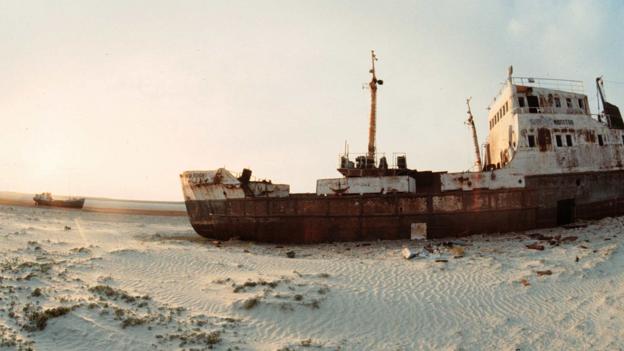
Shrinking Water Resources

But as droughts, population growth and farming demand deplete aquifers worldwide, water prices and demand for innovative water technology are set to steadily rise, said experts.

“The dry regions such as the American Southwest are getting drier,” said Simon Gottelier, an investment manager at Impax Asset Management in London.

Every place on the global map will need to spend money on water, said Gottelier. He predicts that the water industry will grow 5% to 7% each year on average.

Financial firms are meeting the demand for investable opportunities in some new ways. Texas-based Waterfund LLC, for one, is creating swaps, a derivative where one security is exchanged for another. The risk management firm has also teamed with IBM to craft a water index that finally pins a price on water use in the world’s 100 largest cities. Through these swaps, institutions can then hedge their risks when water prices rise.

The long view

Water stocks are a multi-decade opportunity, Gottelier said, for many reasons. One, and arguably the most urgent, is cleaning polluted water. The mighty Nile, which runs through nine nations and supports 80 million people throughout the region, is polluted, since heavy regulation only allocates water flow. Even though it’s polluted and carries diseases, the river water is used for farming, drinking and bathing.

The Nile River

And in water-starved China, 80% of the rivers and lakes are polluted, by World Bank estimates. Shanghai alone is spending tens of billions of yuan to fix the problem. India has a similar problem: over-polluted rivers such as the Ganges and Indus. The government is investing the equivalent of tens of millions of dollars on treatment facilities.

So, like many problems with a business-oriented solution, investors are seeking ways to profit from the surging demand for technology and systems to clean and filter contaminated water.

Companies are also eager to discover and extract more H2O. Seventy percent of the planet is covered in water, but only 3% of it is fresh. And that supply is mainly stashed in hard-to-reach places such as icecaps and deep underground reservoirs.

Easily gotten sources — reservoirs, lakes and rivers — are getting quickly depleted. The Aral Sea in Uzbekistan, for example, has shrunk so much that former fishing villages are now surrounded by desert land. Formerly part of the famous Silk Road, the Aral Sea will be completely dry within a decade.

Storied rivers such as the Nile and the Colorado in the US are also losing water as dams and other measures divert water from their flows for agricultural and other uses.

“Too much water is also being taken out of the Nile,” said Dr Jenny Kehl, director of the Center for Water Policy at the University of Wisconsin-Milwaukee. But the Nile isn’t alone, she added, since other great rivers such as the Jordan and the Mekong are also running drier as usage increases.

Deep underground aquifers, which store the freshest water, are also in rough shape as increased demand drains them dry. The problem is particularly acute in North Africa and the southwestern US, Kehl added.

Good news for water companies

Both dwindling supplies and dirtier water are translating into tighter water management. And that’s good news for the 300 global companies plying the water market. Most are in the US, followed by Europe, said Gottelier. Japan is a serious player, too.

Unlike taming carbon, water is a cheerier story.

“There are already lots of solutions in place,” said Cate Lamb, head of Carbon Disclosure Project’s water program. “So water management can shift much more rapidly than carbon.”

Repairing and monitoring crumbling, leaky pipes, pumps and valves is a key part of the water market. There are about 50 to 100 years of underinvestment in water supply upgrades in parts of Europe, said Gottelier, which leads to lots of leakage. In the US, the EPA estimates that upgrades to its aged water infrastructure will cost as much as $400 billion.

Water needs will translate into recurring business for infrastructure manufacturers such as Swiss-based Pentair Ltd, Texas based Flowserve Corp, and New York-based Xylem, said Matthew Sheldon, a portfolio manager for the Calvert Global Water Fund. “They all have very strong business models,” he said.

No surprise, then, that the $197 million Calvert fund’s largest holding is infrastructure stocks, along with technology plays for leak detection. Canada-based Pure Technologies Ltd which inspects and monitors pipelines, is a player in the water efficiency niche. The company is growing 20% to 30% per year, added Sheldon. UK-based Halma PLC also makes leak detection equipment.

Reusing water is the fastest growing niche though, said Sheldon. So water treatment and filtration companies such as Kurita Water Industries Ltd in Japan and China Everbright International in Hong Kong are set to prosper, said Sheldon.

“Much of the world is catching up with purification,” added Neil Berlant, a partner at Crowell, Weedon & Co, a brokerage and money management firm in Los Angeles. “Water treatment transcends all borders.”

Desalination, which removes salt from water, is being heavily used in Israel, Spain and Australia. The main reason: its price is decreasing.

“Up until now, desalination has been a small part of the water industry,” said Sheldon. “But it should begin accelerating next year.” Desalination players include big water utility companies such as VeoliaEnvironnement and Suez Environnement in France and the smaller pure-play company Energy Recovery in the US.

Oddly, few innovative emerging water companies are making waves. The initial public offering market, like the broader market, is still suffering. And new biological treatments for recovering energy and nutrients from waste water are still in their infancy, said Sheldon. More


Saturday, August 3, 2013

Beware water privatization and the foul stench of exploitation

Sounding more like an admonishing primary school teacher than ever, Margaret Thatcher announced in 1976 that the was that they" always run out of other people's money". I have thought since the crash of 2008 that the same can now be said for the vast system of state capitalism she bequeathed us.

The price of deregulating the banks we know about to our cost. We have received fair warning that George Osborne's taxpayer-subsidised mortgage market will be emptying your wallet when the next bubble bursts. But how long will it be before the stench from the monopolistic exploitation of water – the very stuff of life – reaches the public's nostrils?

That stink is actual as well as metaphorical. As Damian Carrington and Sophie Barnes report on theObserver's news pages, the most pestilential polluters of England's rivers are the privatised water companies charged with protecting them. They leak untreated sewage for a reason that ought to find a place in the "national conversation", but never does because of a depressingly familiar complacency. The political class, respectable opinion, call it what you will, assumes that the water industry is beyond political argument. Thatcher fixed the status of the privatised utilities and it is now as unchangeable as the weather. I wonder how long that line can hold.

The negligence of successive governments allow dubious companies, private equity firms more often that not, to take over a vital national interest. They have engaged in widespread tax avoidance. They have hidden what ought to be a public service behind the high walls of commercial confidentiality. Most egregiously, they have loaded their books with debt, not to improve Britain's decaying network of sewers and pipes, but to provide fantastic returns to investors from a captive market of consumers.

By the reckoning of the ratings agencies – not the most reliable guides, I know, but all we have – the debts are unsustainable in several instances. You will pay if the companies go bust. Indeed, you are already paying.

A devastating analysis by George Turner of the liberal thinktank CentreForum listed the ways last month. "Since 2005," it concluded, "prices for water have been too high, more than required to run a decent service for customers whilst providing a reasonable return for investors." Investors have taken an unreasonable return instead. So unreasonable, indeed, that as well as making the public pay through inflated prices and the taxes they dodge, the water companies are looking for direct taxpayer support.

The one example that has received attention is Thames Water asking the government for money to build a new and much needed super-sewer through London. Readers old enough to remember the capitalist utopianism of the 1980s can gaze on that demand and see how the promises of the Thatcherites have turned to ashes. Conservatives at the time said privatisation would turn Britain into a "share-owning democracy". They ran a bizarre but effective advertising campaign asking viewers to "tell Sid" about the wealth privatisation would bring him. As it turned out, Sid no more ended up owning the water companies than you or I did.

Thames is controlled by a consortium led by Macquarie, an Australian bank. Despite making healthy profits for years, the company is too enfeebled by debt to fund a major building project without taxpayer support. Once again, we old timers will remember with all the clarity we can muster that the Thatcherites also promised that their privatised water companies would no longer suck on the public teat but would be free to raise money in the marketplace. That pledge has gone down the drain too.

If it were a respectable company operating in any kind of functioning marketplace, Thames Water would have had to have changed its ways years ago or go bust. But private monopolies are free to pursue private interests, restrained only by a regulator whose behaviour to date has been flaccid to the point of impotence.

The water companies' environmental record makes the point better than I ever could. In the past nine years, they have polluted waterways and beaches about 1,000 times. The naive reader might wonder why they don't change their ways. The answer appears to be that it is not worth their while. Two-thirds of the spillages resulted in a caution without further punishment. The remaining third attracted fines of £10,800 on average. No private equity manager will wake up screaming at such sanctions.

The level of debt is the thread that ties incompetence, negligence, tax avoidance and over charging together. It allows private equity firms to leverage their original investment and increase their returns exponentially. It also allows them to escape tax. If they raise equity, they must pay tax on profits before they can give dividends to shareholders. If they raise loans, however, they can charge the interest payments against tax.

Today, the average debt to equity ratio of an English water company is around 70%. Some water companies have reached ratios of 80%, (that is, 80% of the value of the company has been borrowed with only 20% invested by the shareholders). The levels are so high that Standard and Poor's has cut credit ratings for water companies, citing as justification that debt has not only been used to finance long-term investment, as debt should, but also to produce "sizable dividend payments", a dangerously short-sighted practice.

CentreForum uses Yorkshire Water to show how the public is being fleeced every which way. In 2006, it whacked up its gearing. Dividends followed suit. Despite spending more than it received from customers, it still paid out £886.8m in dividends – a return for debt and equity investors of 24.1% Overall, the costs to its customers of paying such inflated returns was £139 extra every year on the average water bill between 2005 and 2010.

There is no shortage of ideas for reform. Sir Ian Byatt, a former regulator, wants to see payments in dividends matched by cuts in tariffs. Turner ends his report by concluding that the only way of dealing with private monopolists is to turn their firms into not-for-profit companies. As far as the Westminster bubble is concerned, such ideas are beyond the fringe, but I doubt they will stay there for ever. More


Could Sri Lanka get irrigation boost from ancient reservoirs?

COLOMBO, 1 August 2013 (IRIN) - One way Sri Lanka can better manage its water resources in the face of changing monsoon patterns is through centuries-old water reservoirs, experts say.

Inland fishermen working in the
Kala Weva lake (tank)

Experts at the Colombo-based International Water Management Institute (IWMI) say one way to ease fluctuating rice harvests (due to increasingly erratic monsoon seasons) is to use thousands of ancient small irrigation reservoirs spread out in the Northern, North Central, Eastern, North Western and Southern provinces.

“Tanks [reservoirs] can store water and so are buffers against irregular rainfall supplies,” said Herath Manthrithilake, the head of the institute’s Sri Lanka Development Initiative.

The reservoirs were built between 300 and 400 BC to provide nearby villages with water for agriculture and other needs. They became less important with the introduction of rain-fed cash crops by European colonizers in the 1500s and have been largely untouched since the 1970s with the development of large irrigation and hydropower schemes.

The tanks were constructed by excavating earth and building a large wall around the hole. Most tanks have filled up with sediment, others are hidden by overgrown shrubs or belong to dilapidated networks connecting them to the fields. There is no current estimate, but in 2004 the then government estimated that it would cost some US$20 million at the 2004 exchange rate ($15 million now) to make the tanks functional.

For Werrakoddi Archchilage Premadasa, a 33-year-old farmer from Tanamalvila town in southeastern Uva Province, the tank near his farm is the main source of water for cultivation. “Now the problem is half of the tank is overgrown and it’s also filled with sand… If we can get it to store to its maximum capacity, I don’t think we will have issues with water for cultivation.”

IWMI research has shown that reservoirs can also divert flood waters to the old tanks built on low-lying land, helping to minimize flood damage.

Manthrithilake said a major renovation of thousands of such reservoirs (estimated by researchers to number some 12,000) should be launched if they are to be used effectively. Some 1,000 tanks were repaired in 2004, with no additional repairs planned since then.

“Managing the water resources will be crucial. The monsoon, our main source of water, is changing, forcing us to change the way we use our water resources,” Waduwatte Lekamlage Sumapthipala, formerly the head of the Climate Change Unit at the Ministry of Environment and currently a government adviser, told IRIN.

Weather predictions

A recent World Bank report warned the island’s dry regions are likely to experience less rain while wet zones are at risk of even more deluges.

“The seasonal distribution of precipitation is expected to become amplified, with a decrease of up to 30 percent during the dry season and a 30 percent increase during the wet season,” the report predicted.

Late 2012 and early 2013 floods affected more than one million people nationwide, while a 2012 drought hit an estimated 1.3 million residents.

A survey of flood-affected communities conducted by the Sri Lanka government and the World Food Programme in January this year found 75 percent of the 557,000 people surveyed were either severely food insecure or borderline food insecure.

Of those surveyed, some 33 percent said their main income was through agriculture.

Fluctuating rice production

Rice production has been at the mercy of increasingly unpredictable monsoons in the past three years. In 2011, large harvest losses, around 20 percent of the main harvest, were recorded due to floods.

But the harvest recovered to an extent in mid-2011 when rain-fed irrigation helped to produce a higher-than-average secondary harvest (the country has two harvests annually).

During 2012’s drought the second annual rice harvest fell by up to 10 percent.

However according to the latest country assessments by the UN Food and Agriculture Organization, the rice harvest is expected to recover this year, and is likely to be above four million tons for the first time since 2009.

“The problem is the prices keep going up and down when the harvest falls and picks up. When we don’t have means to keep prices steady, we should look at keeping the harvest steady,” said Liyana Pathirana Rupasena, the deputy director of research at the governmental Hector Kobbekaduwa Agrarian Training and Research Institute (HARTI).

His concern is that poorer communities will cut back on calories or go for rice varieties that are cheaper but less nutritious during price hikes.

Rupasena said despite predicted harvest increases, rice prices are still higher than in 2011 and 2012.

Hydropower problems

In addition to destabilizing rice production, water management problems have hit the country’s energy supply. Sri Lanka typically generates around 40 percent of its electricity using hydro generation.

During August 2012 when the drought was at its worst, hydro-generation barely reached 15 percent; the remaining power was generated through costly thermal sources, which forced the country to spend heavily on oil imports, according to the state.

The 2012 oil import bill for thermal power was around US$2 billion, around a tenth of what Colombo spent on imports for the entire year. More


Thursday, August 1, 2013

Goodbye to All That (Water)

Martha and the Vandellas would have loved it. Metaphorically speaking, the New York Times practically swooned over it. (“An unforgiving heat wave held much of the West in a sweltering embrace over the weekend, tying or breaking temperature records in several cities, grounding flights, sparking forest fires, and contributing to deaths.”)

Colorado River

It was a “deadly” heat wave, a “record” one that, in headlines everywhere, left the West and later the rest of the country “sweltering,” and that was, again in multiple headlines, “scary.” The fire season that accompanied the “blasting,” “blazing” heat had its own set of “record” headlines -- and all of this was increasingly seen, in another set of headlines, as the “new normal” in the West. Given that 2012 had already set a heat record for the continental U.S., that the 10 hottest years on record in this country have all occurred since 1997, and that the East had its own sweltering version of heat that wouldn’t leave town, this should have been beyond arresting.

In response, the nightly primetime news came up with its own convenient set of new terms to describe all this: “extreme” or “severe” heat. Like “extreme" or "severe" weather, these captured the eyeball-gluing sensationalism of our weather moment without having to mention climate change or global warming. Weather, after all, shouldn’t be “politicized.” But if you’re out in the middle of the parching West like TomDispatch regular William deBuys, who recently headed down the Colorado River, certain grim realities about the planet we’re planning to hand over to our children and grandchildren can’t help but come to mind -- along with a feeling, increasingly shared by those in the sweltering cities, that our particular way of life is in the long run unsustainable. Tom

Never Again Enough
Field Notes from a Drying West

Several miles from Phantom Ranch, Grand Canyon, Arizona, April 2013 -- Down here, at the bottom of the continent’s most spectacular canyon, the Colorado River growls past our sandy beach in a wet monotone. Our group of 24 is one week into a 225-mile, 18-day voyage on inflatable rafts from Lees Ferry to Diamond Creek. We settle in for the night. Above us, the canyon walls part like a pair of maloccluded jaws, and moonlight streams between them, bright enough to read by.

One remarkable feature of the modern Colorado, the great whitewater rollercoaster that carved the Grand Canyon, is that it is a tidal river. Before heading for our sleeping bags, we need to retie our six boats to allow for the ebb.

These days, the tides of the Colorado are not lunar but Phoenician. Yes, I’m talking about Phoenix, Arizona. On this April night, when the air conditioners in America’s least sustainable city merely hum, Glen Canyon Dam, immediately upstream from the canyon, will run about 6,500 cubic feet of water through its turbines every second.

Tomorrow, as the sun begins its daily broiling of Phoenix, Scottsdale, Mesa, Tempe, and the rest of central Arizona, the engineers at Glen Canyon will crank the dam’s maw wider until it sucks down 11,000 cubic feet per second (cfs). That boost in flow will enable its hydroelectric generators to deliver “peaking power” to several million air conditioners and cooling plants in Phoenix’s Valley of the Sun. And the flow of the river will therefore nearly double.

It takes time for these dam-controlled tidal pulses to travel downstream. Where we are now, just above Zoroaster Rapid, the river is roughly in phase with the dam: low at night, high in the daytime. Head a few days down the river and it will be the reverse.

By mid-summer, temperatures in Phoenix will routinely soar above 110°F, and power demands will rise to monstrous heights, day and night. The dam will respond: 10,000 cfs will gush through the generators by the light of the moon, 18,000 while an implacable sun rules the sky.

Such are the cycles -- driven by heat, comfort, and human necessity -- of the river at the bottom of the continent’s grandest canyon.

The crucial question for Phoenix, for the Colorado, and for the greater part of the American West is this: How long will the water hold out?

Major Powell’s Main Point

Every trip down the river -- and there are more than 1,000 like ours yearly -- partly reenacts the legendary descent of the Colorado by the one-armed explorer and Civil War veteran John Wesley Powell. The Major, as he preferred to be known, plunged into the Great Unknown with 10 companions in 1869. They started out in four boats from Green River, Wyoming, but one of the men walked out early after nearly drowning in the stretch of whitewater that Powell named Disaster Falls, and three died in the desert after the expedition fractured in its final miles. That left Powell and six others to reach the Mormon settlements on the Virgin River in the vicinity of present-day Las Vegas, Nevada.

Powell’s exploits on the Colorado brought him fame and celebrity, which he parlayed into a career that turned out to be controversial and illustrious in equal measure. As geologist, geographer, and ethnologist, Powell became one of the nation’s most influential scientists. He also excelled as an institution-builder, bureaucrat, political in-fighter, and national scold.

Most famously, and in bold opposition to the boomers and boosters then cheerleading America’s westward migration, he warned that the defining characteristic of western lands was their aridity. Settlement of the West, he wrote, would have to respect the limits aridity imposed.

He was half right.

The subsequent story of the West can indeed be read as an unending duel between society’s thirst and the dryness of the land, but in downtown Phoenix, Las Vegas, or Los Angeles you’d hardly know it.

By the middle years of the twentieth century, western Americans had created a kind of miracle in the desert, successfully conjuring abundance from Powell’s aridity. Thanks to reservoirs large and small, and scores of dams including colossi like Hoover and Glen Canyon, as well as more than 1,000 miles of aqueducts and countless pumps, siphons, tunnels, and diversions, the West has by now been thoroughly re-rivered and re-engineered. It has been given the plumbing system of a giant water-delivery machine, and in the process, its liquid resources have been stretched far beyond anything the Major might have imagined.

Today the Colorado River, the most fully harnessed of the West’s great waterways, provides water to some 40 million people and irrigates nearly 5.5 million acres of farmland. It also touches 22 Indian reservations, seven National Wildlife Reservations, and at least 15 units of the National Park System, including the Grand Canyon.

These achievements come at a cost. The Colorado River no longer flows to the sea, and down here in the bowels of the canyon, its diminishment is everywhere in evidence. In many places, the riverbanks wear a tutu of tamarisk trees along their edge. They have been able to dress up, now that the river, constrained from major flooding, no longer rips their clothes off.

The daily hydroelectric tides gradually wash away the sandbars and beaches that natural floods used to build with the river’s silt and bed load (the sands and gravels that roll along its bottom). Nowadays, nearly all that cargo is trapped in Lake Powell, the enormous reservoir behind Glen Canyon Dam. The water the dam releases is clear and cold (drawn from the depths of the lake), which is just the thing for nonnative trout, but bad news for homegrown chubs and suckers, which evolved, quite literally, in the murk of ages past. Some of the canyon’s native fish species have been extirpated from the canyon; others cling to life by a thread, helped by the protection of the Endangered Species Act. In the last few days, we’ve seen more fisheries biologists along the river and its side-streams than we have tourists.

The Shrinking Cornucopia

In the arid lands of the American West, abundance has a troublesome way of leading back again to scarcity. If you have a lot of something, you find a way to use it up -- at least, that’s the history of the “development” of the Colorado Basin.

Until now, the ever-more-complex water delivery systems of that basin have managed to meet the escalating needs of their users. This is true in part because the states of the Upper Basin (Colorado, Wyoming, Utah, and New Mexico) were slower to develop than their downstream cousins. Under the Colorado River Compact of 1922, the Upper and Lower Basins divided the river with the Upper Basin assuring the Lower of an average of 7.5 million acre-feet (maf) of water per year delivered to Lees Ferry Arizona, the dividing point between the two. The Upper Basin would use the rest. Until recently, however, it left a large share of its water in the river, which California, and secondarily Arizona and Nevada, happily put to use. More


Tuesday, July 30, 2013

Global Warming Endangers South American Water Supply

A reconstruction of past changes in the North and Central Patagonian Ice-field, which plays a vital role in the hydrology of the region, has revealed the ice field had suddenly contracted around 15,000 years ago after a southerly migration of westerly winds.

Central Patagonian Ice-field

This migration of westerly winds towards the south pole has been observed again in modern times and is expected to continue under a warming climate, likely leading to further ice declines in this area affecting seasonal water storage.

"We found that precipitation brought to this region by Southern Hemisphere westerlies played an important role in the glaciation of the North Patagonian Ice-Fields," said Dr Chris Fogwill from the Climate Change Research Centre at the University of New South Wales.

"Our research has shown this ice-field significantly reduced in size when those winds moved southwards."

The North Patagonian Ice-field is vital to maintain seasonal water storage capacity for Argentina and Chile.

"Worryingly, this study suggests the region may well be on a trajectory of irreversible change, which will have profound impacts on agriculture and the increasing dependency on hydroelectric power in Chile and Argentina," Dr Fogwill said.

The team revealed the importance of the winds on the ice-sheets and consequent water supply by using rare isotopes to uncover changes in the ice-sheet thickness since the last major glaciation. This revealed the decline in the ice-sheet between 15,000 to 19,000 years ago.

Using a separate collection of ocean cores they were then able to determine that this decline coincided with the movement southwards of the westerlies.

The researchers found that a lack of precipitation caused by this movement, coupled with additional warming caused by rapid ice loss saw a sharp decline in glaciers with no seasonal recovery.

Interestingly, the southern part of the ice-field did not appear to be impacted by the movement of these winds. Instead it appeared that ocean currents and temperatures played a more important role in maintaining the ice in this section.

"The ice-field in the Northern and Central region of the Patagonian ice-field are highly sensitive to precipitation and need this to remain healthy," said Dr Fogwill. More


Wednesday, July 24, 2013

How Yemen Chewed Itself Dry

Farming Qat, Wasting Water

In a little over a decade, Sana’a, Yemen, may become the world’s first capital to run out of water. Failed governance and environmental mismanagement share some of the blame for drying up the city. But there is also a more surprising culprit: a national addiction to qat, a narcotic that is incredibly water-intensive to cultivate.

If current trends continue, by 2025 the city’s projected 4.2 million inhabitants will become water refugees, forced to flee their barren home for wetter lands. In preparation, some officials have already considered relocating the capital to the coast. Others have proposed focusing on desalination and conservation to buy time.

As policymakers butt heads over the best course for Yemen, the dwindling water supply is already leading to instability: according to Al-Thawra, one of the country's leading newspapers, 70 to 80 percent of conflicts in Yemen’s rural regions are water-related. And across the country, Yemen’s Interior Ministry estimates, water- and land-related disputes result in about 4,000 deaths each year -- 35 times the number of casualties in the deadliest al Qaeda attack in the county’s history.

THE QAT CAME BACK

The cultivation of qat, a mild narcotic plant that releases a stimulant when chewed, accounts for up to 40 percent of the water drawn from the Sana’a Basin each year, and that figure is rising. That is both because qat takes a lot of water to farm (much more than coffee, another plant that does well in Yemen’s fertile soil) and because cultivation of it increases by around 12 percent each year, according to Yemen’s Ministry of Agriculture and Water Resources. Not only is the crop drying the Sana’a Basin, it has displaced over tens of thousands of hectares of vital crops -- fruits, vegetables, and coffee -- which has sent food prices soaring. According to the World Bank, rising food prices, in turn, pushed an additional six percent of the country into poverty in 2008 alone.

Why the increasing reliance on qat production? Farmers are willing to put up with the plant’s high demand for water because it has a more regular yield than other crops and because the market for it is virtually guaranteed. Every cubic meter of water used for qat cultivation returns a profit five times as great as that for the next most lucrative crop, grapes. No wonder: according to the World Health Organization, up to 90 percent of adult men in Yemen chew qat for three to four hours daily, and women literally sing its praises. (A popular song goes: “Long live qat, which … makes us stay peacefully at home with our friends.”) At weddings and special events, a family’s social standing is gauged by the value of qat served to guests. One might think that such a popular drug would have deep roots in a culture, but its widespread use is actually relatively new: in the 1970s, when Yemen had few paved roads, qat, which has a shelf life of only 24 to 48 hours, often could not reach its markets in time, so fewer people had access to it.

Yemen cannot continue using water this way. In 2011, the rate of water consumption from the Sana’a Basin exceeded the rate of natural recharge by a factor of five. And, even understanding this, Yemenis have placed little value on conservation: much of the country’s 68 billion cubic meters of annual rainwater is wasted due to mismanagement and inadequate damns.

Part of the problem is that farmers, for whom the physical labor exerted in agriculture is a source of pride, are attached to wasteful practices, such as flood irrigation (the uncontrolled distribution of water over soil). Drip irrigation -- a practice that is about 35 percent more efficient and widely available at low cost -- could easily increase returns on water. But when asked about drip irrigation, one farmer told me that “flood irrigation is more honorable … all [drip irrigation] requires is pumping water up into the tank.”

Making things worse, the country’s decaying dams seep water that could otherwise be used productively. May 2010 saw flooding -- the worst to hit Sana’a in decades -- but very little of the water was captured for later use. Moreover, the country’s well system is a disaster. By law, only the government is allowed to dig and maintain wells. But according to some interpretations of sharia, which Yemen’s constitution specifies as the sole legal framework, a well drilled on privately owned land is the property of the landlord, not of the state. So drilling continues. Today, Yemen’s National Water and Sanitation Authority, which is tasked with urban water administration, supplies water to only 36 percent of Sana’a’s households. The other two-thirds get their supplies from groundwater wells.

The wells are a public health nightmare -- the country’s groundwater is increasingly contaminated by sewage effluent. Beyond that, the wells prevent the National Water and Resource Authority, which is responsible for managing the country’s water resources in a sustainable way, from enforcing conservation measures, such as improving irrigation efficiency.

DON’T GO CHASING WATERFALLS

Of course, those officials know that Sana’a is facing an arid future. Moving the capital city, as some have proposed, would cost over $40 billion, according to some estimates. Securing the funds would be nearly impossible: approximately 75 percent of the government’s revenue is derived from rapidly depleting oil reserves, and the World Bank predicts that oil will stop generating income for the Yemeni government by 2017. Foreign aid is similarly scant.

Even if it were possible to raise the funds, moving an entire city of over two million people would surely lead to internal strife. The tribal concept of juwarah (rights of neighbors) often inhibits the sale of land to members of other tribes. The transfer of land to Sana’a’s two million displaced residents could thus lead to chaos.

Another idea, which the Ministry of Agriculture and Water Resources (MAWR) has discussed, is to transfer water to Sana’a from other sources. Unfortunately for Yemen, all the rest of the country’s fresh water is currently in use. Therefore, transferring water to Sana’a would essentially involve siphoning it away from others, also inviting conflict.

Policymakers have also toyed with the idea of alleviating the strain on the Sana’a Basin by decreasing agriculture in the region. But that would only kick the can down the road, because, even without agriculture, and given all of Yemen’s other poor water practices, the growing population would eventually dry out the basin anyway. In addition, decreasing agriculture would push up food prices even further.

LIQUID ASSET

Instead, the government should do three things to secure its water future: push farmers and the public away from qat, shore up Yemen’s existing water infrastructure, and manufacture new potable water through desalinization.

First, the government should encourage farmers to switch to less water-intensive crops, such as cactus fruits. For now, the government subsidizes diesel -- the main fuel used to extract groundwater -- which accounts for 80 percent of the cost of qat cultivation. The low cost of extraction gives farmers little reason to switch to other crops or use sustainable farming practices. Attempts to lift a portion of the subsidy several times between 1995 and the present raised the price of diesel and dragged water up closer to its true economic price. Those changes were not enough to discourage qat production altogether, but at least obliged farmers to start thinking about more efficient irrigation techniques. Should the government opt to decrease the subsidy again, the farmers could be pushed even further.

On the supply side of the equation, the government should also launch a public campaign against qat use. Although qat is not deadly, the health risks associated with it are many -- they include hyperactivity, increased blood pressure, liver complications, ulcers, and impotence -- and the societal costs are nothing to sneeze at. Across the country, around 30 percent of household income, on average, is used for buying qat, despite the fact that 45 percent of Yemenis live below the poverty line. Qat has also been linked to diminished productivity at work.

In its campaign against qat use, the Yemeni government has a good model to follow: its own water conservation campaign from 2007, for which it developed a character named Rowyan (meaning “to have quenched one’s thirst”). Rowyan’s face appeared on wheel covers and in storefronts throughout Sana’a, and the campaign managed to at least convince some Yemenis that water scarcity was a problem A similar campaign against qat could help gradually wean some chewers away from the habit.

Second, the government needs to encourage improved irrigation techniques in all agricultural areas -- ones that grow the narcotic as well as other crops. It should obligate more farmers to opt for rain irrigation instead of groundwater use, which wouldn’t run counter to their desire to do things by hand. More than one million acres of arable land that used to be irrigated by rainfall (as of the 1970s) are now doused with water drawn from nonrenewable sources. There is no reason that those acres can’t be reclaimed.

The National Water and Resource Authority also needs to cooperate with Yemen’s local leadership, which, because it makes money off private wells and other water sources, has a vested interest in inefficient use. The NWRA can do so by taking advantage of the political transition in Yemen that accompanied the Arab Spring. For one, the ongoing national dialogue conference, which brings together 565 Yemenis from all segments of society to collaborate on forming a new government, might ease distrust of state institutions. A relationship of cooperation, rather than antagonism, will help the NWRA gain legitimacy in the eyes of local leadership, which will aid with the implementation of conservation measures in places that are outside of the government’s reach.

The government should also take care of Yemen’s leaky water pipes, which waste up to 60 percent of the water they contain. Money for that, too, will be hard to find. But it could court more investment from countries such as Saudi Arabia, whose security interests are inseparable from its southern neighbor’s. Finally, the government must limit the drilling of wells for domestic purposes.

Conserving the water that Yemen has now will only go so far. The depletion of nonrenewable groundwater might leave Yemen with no real option other than to manufacture new water through desalinization. Pumping desalinated water from plants near the sea to Sana’a would be costly, but the fixed startup costs would be distributed across time and would be far less than moving the capital. In the beginning, the government will have to temporarily subsidize desalinated water so that it would be within reach for most consumers. The government would likely need foreign aid to implement this subsidy and to develop the desalination infrastructure. More

Monday, July 22, 2013

Peak Water: What Happens When the Wells Go Dry?

Peak oil has generated headlines in recent years, but the real threat to our future is peak water. There are substitutes for oil, but not for water. We can produce food without oil, but not without water.

We drink on average four liters of water per day, in one form or another, but the food we eat each day requires 2,000 liters of water to produce, or 500 times as much. Getting enough water to drink is relatively easy, but finding enough to produce the ever-growing quantities of grain the world consumes is another matter.

Grain consumed directly supplies nearly half of our calories. That consumed indirectly as meat, milk, and eggs supplies a large part of the remainder. Today roughly 40 percent of the world grain harvest comes from irrigated land. It thus comes as no surprise that irrigation expansion has played a central role in tripling the world grain harvest over the last six decades.

During the last half of the twentieth century, the world’s irrigated area expanded from close to 250 million acres (100 million hectares) in 1950 to roughly 700 million in 2000. This near tripling of world irrigation within 50 years was historically unique. But since then the growth in irrigation has come to a near standstill, expanding only 10 percent between 2000 and 2010.

In looking at water and our future, we face many questions and few answers. Could the world be facing peak water? Or has it already peaked?

Farmers get their irrigation water either from rivers or from underground aquifers. Historically, beginning with the Sumerians some 6,000 years ago, irrigation water came from building dams across rivers, creating reservoirs that then enabled them to divert the water onto the land through a network of gravity-fed canals. This method of irrigation prevailed until the second half of the twentieth century, where with few sites remaining for building dams, the prospects for expanding surface irrigation faded. Farmers then turned to drilling wells to tap underground water resources.

In doing so, they learned that there are two types of aquifers: those that are replenishable through rainfall, which are in the majority, and those that consist of water laid down eons ago, and thus do not recharge. The latter, known as fossil aquifers, include two strategically important ones, the deep aquifer under the North China Plain and the Ogallala aquifer under the U.S. Great Plains.

Tapping underground water resources helped expand world food production, but as the demand for grain continued climbing, so too did the amount of water pumped. Eventually the extraction of water began to exceed the recharge of aquifers from precipitation, and water tables began to fall. And then wells begin to go dry. In effect, overpumping creates a water-based food bubble, one that will burst when the aquifer is depleted and the rate of pumping is necessarily reduced to the rate of recharge.

Today some 18 countries, containing half the world’s people, are overpumping their aquifers. Among these are the big three grain producers—China, India, and the United States—and several other populous countries, including Iran, Pakistan and Mexico. More